Thursday, May 12, 2016

My Favorite Bobby Darin Songs -- Part Two

Time to share my top 5 favorite Bobby Darin songs.  This list has changed over the years, and will doubtless change again as I discover songs of his that I hadn't heard before (and yes, there are still some of those out there --  he recorded about 500 songs, many of which were never released at all in his lifetime, and some of which are still not out on CD or mp3).  One thing hasn't changed, though -- I love his "Mack the Knife" best of all.  In fact, it's my favorite song by any recording artist.


5.  "Softly, as in a Morning Sunrise" is from his second album, "That's All," the album that made him a household name.  Like he did so often, Bobby took a love song and sang it brash and bold instead.  The result?  Electrifying!


4.  "Feeling Good" is a much more recent favorite of mine -- I heard it for the first time a couple of years ago, and it's just plain fun.


3.  "Happy" is the love song from the Billie Holliday biopic Lady Sings the Blues (1972).  It's the last big single Bobby released before he died.  It's tender and haunting and hopeful, and makes me cry oftener than any of his other songs, but in a good way.  Honestly, if you're going to listen to just one song in this post, listen to this one.  But the ending drags on -- when the backup singers start singing, "Happy, I feel so happy, you make me happy" you can quit if you want, cuz Bobby doesn't sing anymore from there on out.


2.  "Don't Rain on My Parade" is kind of my anthem for life.  I like to listen to it when I need pepping up, or need to get my moxie on to do something I know will be tough.


1.  "Mack the Knife" is from the same album as "Softly, as in a Morning Sunrise," and it was Bobby's biggest hit.  It set a record for staying at #1 the most weeks on the Billboard charts at that time, and has been the song people most associate with him ever since.  Here's that classic recording:


And as a bonus, here he is singing it on TV in 1959, twenty-three years old and on top of the world:


Like the title of his star-making album says... That's All :-)

Wednesday, May 11, 2016

My Favorite Bobby Darin Movies


Today, I'm doing mini-reviews for my five favorite Bobby Darin movies.  I'll be doing a full review of Captain Newman, M.D. later this week, too, but for now, this will give you an idea of what each of these are like.


1.  Gunfight in Abilene (1967) opens on the Civil War.  Captain Cal Wayne (Bobby Darin) and the remaining men under his command are cut off from the rest of the Confederate Army.  While trying to find an escape route during the night, Wayne accidentally shoots and kills his best friend, Dave Evers, and is then captured by Union troops.

Some time later, Cal Wayne returns to Abilene, Kansas, where he and Dave grew up.  There he finds that he had erroneously been reported dead, and his childhood sweetheart Amy (Emily Banks) has become engaged to his friend Dave's older brother, Grant Evers (Leslie Nielson).  Grant is trying to enlarge his ranch while keeping peace with the small farmers and ranchers around Abilene even as he pushes more and more of them off their land.  He asks Cal Wayne to take on his old job as sheriff because Wayne gets along well with the farmers, and to everyone's surprise, Wayne agrees.  Nobody knows that he's doing so out of guilt over Dave's death.  For the same reason, he didn't protest when he learned about Amy and Grant's plans to marry.  His deputy, Ward Kent (Don Galloway), learns the truth eventually, and uses it to convince Wayne to confront Grant over the death of a young farmer at the hands of some of Grant's ranch hands.

I cowrote a sequel to it, called "Aftermath in Abilene," which you can read online here.


2.  Captain Newman, M.D. (1963) focuses on a mental ward at a military hospital during WWII.  Captain Josiah Newman (Gregory Peck) cares for a variety of mentally disturbed soldiers, including Colonel Bliss (Eddie Albert), Captain Winston (Robert Duvall), and Cpl. Tompkins (Bobby Darin).  Some, he can help, even "cure."  Some, he can't.  Assisting him are the lovely Lt. Corum (Angie Dickinson), the wily Cpl. Leibowitz (Tony Curtis), and a variety of other interesting characters.  It's something of a dramedy, and bounces from very serious subjects to very funny ones and back, sometimes in the same scene.  Bobby Darin was nominated for the Oscar for Best Supporting Actor for this role.

I'll be posting a much more detailed review of this in a couple of days, so for now I'll say that if you want to pick just one of these films to try out, pick this one.


3.  Hell is for Heroes (1962) was written by Robert Pirosh, who also created my favorite TV show ever, Combat! (1962-67).  It centers on a squad of infantrymen, led by Sgt. Pike (Fess Parker).  You've got a lot of archetypes in that squad:  the handyman (James Coburn), the troublemaker (Steve McQueen), then opportunist (Bobby Darin), and the new kid (Bob Newhart).  Together, they try to survive a Nazi onslaught and take out an enemy bunker, against overwhelming odds.  Not everyone makes it out alive, but not everyone dies, either.


4.  State Fair (1962) is an updated version of the 1940s classic that starred Dana Andrews.  Set in Texas instead of Iowa, it concerns a father (Tom Ewell) and mother (Alice Faye) who take their mostly grown-up daughter and son (Pamela Tiffin and Pat Boone) to the state fair for a week.  The daughter gets swept off her feet by a fast-talking TV reporter (Bobby Darin), and the son plunges into forbidden romance with a sultry singer (Ann-Margret).  It's not as winsome and charming as the 1945 version, and I really just watch it for Bobby Darin.


5.  That Funny Feeling (1965) pairs Bobby with his wife at the time, Sandra Dee.  Young maid-for-hire Joan (Dee) pretends that she lives in one of the upscale apartments she cleans, rather than the tiny place she shares with a friend.  She begins dating a successful businessman named Tom (Darin), but to his great surprise, she takes him back to the apartment she pretends is hers, which is actually his!  He doesn't let on that it's his apartment, but instead tries to figure out why she claims it's hers, and various bits of comedic nonsense result.

I've seen quite a few more of his movies, as well as his appearances on various TV shows, but these are the ones I like best and watch most often.

Have you seen any of these?  If so, what did you think of it?  If not, which one interests you the most?


Tuesday, May 10, 2016

Guest Post on the "Charade" (1963) Soundtrack... and Bobby Darin's Version of the Title Song


Today, I've got a guest post about Henry Mancini's classic score for Charade (1963) up here on James the Movie Reviewer's blog.  It's such a stylish, zingy soundtrack, and I love it.

I also love Bobby Darin's recording of the title track, which I'll share with you here today for Bobby Darin Week.  Enjoy!


Monday, May 09, 2016

My Favorite Bobby Darin Songs -- Part One

I first encountered Bobby Darin through his music, so of course I'm going to dedicate a couple of posts this week to my favorite songs of his.  I thought I'd do a top ten list, but I want to link to videos of each song, which gets kind of long for ten songs, so I'm splitting the list in half.  Here are numbers 10-6, and I'll do another post later this week with numbers 5-1.


10.  "Hi De Ho" is a bluesy, jazzy, funky little number he performed live later in his career.  It's got such a marvelous swagger to it, and I can't help but grin when I hear it.  I was listening to a different live version of this a lot while doing revisions on "The Man on the Buckskin Horse" because it gives me a confidence boost.  This is a live version from 1970 that also features him playing the harmonica, and since Bobby's live performances are electric, I thought I'd share this version so you could see him strut his stuff.


9.  "Amy" is from my favorite Bobby Darin movie, Gunfight in Abilene.  This is the version released as a record, not quite the same as the one used during the movie, but it's still a lovely song.


8.  "She Knows" has a very different sound from that previous song, even though it's also a love song.  It's minor, for one thing, and kind of brash, more sexy than sweet.


7.  "Change" is a song that makes me think.  It's helped me accept some changes in my life over the past few years, and probably will in the future as well.  It's from the late '60s, when Bobby was into protest songs and folk songs, trying to help the world, well, change.  Warning: it does have the word "damned" repeated in it, so if that would bother you, skip this one.


6.  "Somewhere" is his take on the famous love song from West Side Story.  It's Bobby at his most tender.  The first time I listened to this, I cried.


That's all the Bobby Darin goodness I have for you today.  I hope you've enjoyed these, and if you want more... there's more.  He recorded hundreds and hundreds of songs, most of which are available on CD, and many of which you can find on YouTube.

Sunday, May 08, 2016

Bobby Darin

In case you can't tell, I'm celebrating Bobby Darin this week.  It would have been his 80th birthday on Saturday, and I just decided to dedicate my blog to him for a whole week in recognition of that fact.  If you're a fan of his and are writing a post this week in his honor, please do share a link here so I can read it!


I became a Bobby Darin fan back in 1997, when I went on a quest to find and listen to his version of "Mack the Knife."  We didn't have internet at our home, and even if we did, YouTube didn't exist, so I couldn't just go Google for it and hear it.  I listened to our local Oldies station for weeks, hoping to hear it.  I even called in during their all-request hour and asked for it, but was too late to get my song played.  Finally, I heard it on July 7, and I liked it so well that the next day, I bought a tape of his "Greatest Hits."  A cassette tape, yes -- we did have CDs, but they were more expensive, and I just wanted to hear this one song over and over!  So a $5 tape would do.

I waited to listen to the tape until I was in bed that night -- I would often listen to the radio or a tape with headphones on while I worked on a story before going to sleep.  I put the tape in, listened to "Mack the Knife" a couple times, and then continued to listen to the rest of the songs.  By the end of that tape, I knew everything had changed.  I was seventeen years old, and I had found a voice that would stay with me forever.


Bobby Darin was born Walden Robert Cassotto in New York City in 1936.  He had rheumatic fever multiple times as a small child, which stunted his growth and damaged his heart.  When still a boy, he overheard the doctor tell his family that he would not live to see sixteen.  Bobby lived all his life with that eventual death sentence hanging over him, which is probably why he had such a drive not just to succeed, but to produce as much music and as many movies as he could, while he had the chance.


Bobby grew up believing that Nina Cassotto was his sister, and her mother was his mother too.  It wasn't until he was in his 30s that he learned the truth:  Nina was his mother.  She'd been an unmarried, pregnant teen, and so they just moved to a new neighborhood when he was born, and everyone believed that his grandmother Polly was his mother.

Bobby and Sandra

He was married twice, first to Sandra Dee, with whom he had a son named Dodd.  They divorced, and he later married Andrea Yeager, but divorced her shortly before his death because he was afraid Dodd wouldn't inherit his fair share of Bobby's estate otherwise.

Bobby and Andrea

Bobby Darin died on December 20, 1973, at the age of 37.  That's one year older than I am right now.  He died in a hospital following open heart surgery, which was very experimental and risky at that time.  He left behind him an astonishing catalog of musical recordings, as well as quite a few movies, TV show appearances, and so on.

© Guy Webster

Bobby was fiercely intelligent, and almost too talented to be believed.  He graduated from the Bronx High School of Science, one of the best schools in NYC at that time.  And he was an avid chess player all through his adult life.  He could play any musical instrument you handed to him, and he wrote a staggering number of songs. And he recorded in every musical style around in the 1950s, '60s, and early '70s:  swing, jazz, blues, rock-and-roll, country-and-western, folk, and even a spoken format some call an early form of rap.


So this week, I'll be doing a series of posts about this singer/songwriter/actor/entertainer who is very dear to my heart.  I hope you enjoy them.

Saturday, May 07, 2016

Movie-Themed Liebster Award

Sarah at How to Watch a Movie nominated me for a Liebster Award :-)  Thanks, Sarah!  All her questions are movie-themed, which makes this especially fun for me.


Rules:
1. Answer the 11 questions given by the person who nominated you
2. Nominate other bloggers (up to 11) and give them 11 questions to answer.

Sarah's Questions:

1. Favorite movie genre, and why?

Westerns.  That's where my heart roams free.  Basically, I love all the possibilities present in that world -- people can grow and change in endless ways.  You can have a lot of characters from very different backgrounds thrown together and have to work with one another when ordinarily, they wouldn't have anything to do with each other.  I find that fascinating.  Also, I love horses and wide open spaces.


2. Favorite movie that's an adaptation of a book you've read?

The Lord of the Rings trilogy, most likely.

3. An actor or actress you're enjoying who you've only recently noticed?

Alan Ladd.  "Enjoying" is not a deep enough word, here.  "Enthralled with" might come close.  In a good way.  I'd seen him in a couple things over the years, but never paid a huge amount of attention until I watched Whispering Smith (1948) this spring.  Since February, I've watched him in 9 different movies, many of them 2 or 3 times each...


4. A favorite "unexpected surprise" movie?

As in, a movie I didn't expect to like, but then ended up loving?  I'm going to say Tangled (2010), because I didn't watch it until about a year ago, and I had to watch it in two parts, so the first night, I watched until just after the "Kingdom Dance" scene and quit there, and I was like, "Oh, this is nice, but I'm just not clicking with it."  The next night, I picked right back up with "At Last I See the Light," had tears running down my cheeks by the end of that song, and flat-out loved the movie.  Definitely a surprise.

5. A movie that has a cast catered to you?

Probably Hell is for Heroes (1962).  When I found out Bobby Darin made a war movie with Steve McQueen, Fess Parker, and James Coburn -- there's no way I wasn't going to love that.  I was right.


6. An obscure movie that you think is great and you wish more people knew about?

So many!!!  Gunfight in Abilene (1967), Across the Great Divide (1976), Mrs. Winterbourne (1996), And Now Tomorrow (1944), It's Always Fair Weather (1955) -- I love a lot of obscure movies.

7. A movie that has a great soundtrack?

I have to choose one?  Hmph.  Um... well... I talk a lot about soundtracks, and one I consider an absolute masterpiece is Miklos Rosza's score for Ben-Hur (1959).

8. A movie that reminds you of summer?

10 Things I Hate About You (1999) specifically reminds me of the summer between my sophomore and junior years of college.  I first saw it toward the end of my sophomore year, then went home over the summer, rented it, showed it to my brother (I was 19, he was 15), and we watched it every night for like 5 nights running.  I just kept renewing it.  Man, we loved that movie.


9. A movie you loved as a kid and still love (not because of nostalgia)?

Well, The Man from Snowy River (1982) has been my favorite movie since I was 2 years old...

10. Plot device pet peeve?

I can't stand "near-misses."  Where characters are searching for each other and they come super close to finding each other, but don't because of some tiny circumstance.  Those frustrate me to no end.

11. Ending preference for movies, and why?

I prefer for a movie to end with moral balance restored to the universe.  Good guys win, and bad guys lose.  This can be either a happy or a sad ending, but gotta have that balance back.


Now, I shall tag:

Of Bookshelves and Daydreams (Ashley)
Castles in the Air (Abigail)
Coffee, Classics, and Craziness (Eva)
Fictionally (Grace)
Fiction Prediliction (Lynn M)
Healthy Simplicity (Jennifer)
A Lantern in Her Hand (Emma Jane)
An Odd Blog (Laura)
Sidewalk Crossings (DKoren)
Sunshine and Scribblings (Mary)
You, Me, and a Cup of Tea (Lois)

And here are your 11 questions:

1.  Are there any movies you like better than the books they were based on?
2.  Have you ever liked a remake better than the original film?
3.  What movie do you enjoy introducing other people to?
4.  Do you identify strongly with any movie characters?
5.  Do you have any favorite film score composers?
6.  What's the oldest movie you've ever watched?
7.  What's the newest movie you've watched?
8.  Do you have any favorite movie-watching snacks?
9.  Whose movie recommendations do you tend to trust?
10.  What was the last movie you watched?
11.  What's the next movie you plan to watch?

Yeah, I decided to do a movie-related theme for mine as well.  If I didn't tag you, and you want to answer these, go ahead and do so on your blog too, or in my comments here, whatever.  Play if you want to!

Friday, May 06, 2016

"Beyond the Rocks" (1922)

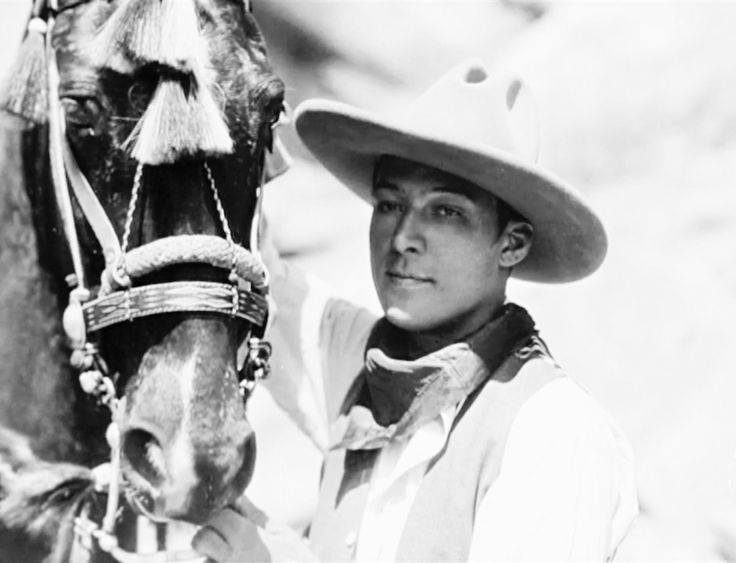
Happy birthday, Rudolph Valentino!

(NO idea how this photo came about, other than I've seen one of him in the same hat
that says it was taken at Palm Springs.  Not from any of his movies, AFAIK.
Definitely not from Beyond the Rocks.  But I wanted to use it anyway.)

I tend to celebrate Rudy's birthday by watching one of his movies, and sometimes by blogging about them, or posting a little tribute to him, or whatever.  He's rather special to me, for various reasons, one being that I'd love to go back in time and make friends with him because I think he could have used a very good friend who wouldn't let him die alone in a hotel.  But that's another story.  Anyway, I love Rudy, and that's why he's up there on my blog header right now, with my other two beloved May birthday boys, whom I'll blog more about later this month :-)


In Rudy's honor, today I'm reviewing his movie Beyond the Rocks (1922), which is based on a novel by Elinor Glyn.  The only thing I know about Elinor Glyn is that she wrote trashy novels that Marion the Librarian mentioned in The Music Man.  Judging by this movie, I won't be reading any of her books.  Not that it's exactly terrible... it's just not very good, either.

(If you want to read my reviews of some of Rudy's really good movies, I've written about The Sheik (1921), Moran of the Lady Letty (1922), and The Eagle (1925) pretty extensively.)

SO I'm going to review it anyway because it's not a total write-off.  I mean, it's still a Rudolph Valentino movie, and we've only got a precious few of those.  It's the only film he and Gloria Swanson made, and as you can tell from the lobby card above, she was kind of a bigger deal than he was at that point. Or the studio thought so, anyway.  In fact, they spelled his name Rodolph there.  (It was originally Rodolfo, and it get spelled several different ways in Hollywood, and nobody ever seemed to care.  Simpler times, my friends.  Simpler times.)  This film was only recently rediscovered -- there were no known surviving copies until someone found a print in 2003, in the Netherlands.  It's been preserved and digitally remastered for the DVD, with a new soundtrack and new English title cards, since the copy they found had Dutch ones.

The print is pretty fair for a film of this age, but there are several places where it was obviously unsalvageable, and gets all bubbly and weird.  However, what we do have is entertaining, especially this one thing I think Rudy does in two different places, which delighted me so much that I'll totally rewatch this for just those moments.  Which I'll tell you alllll about when we get to them.

So anyway, it all begins with this chick, Theodora (Gloria Swanson), out for a row in her boat.  She's waving to her beloved, aging father, who's watching from the shore.


For no fathomable reason whatsoever, except for the fact that she handles the oars like she's never been in a rowboat before, she falls out.  Nearby, there's this handsome, sophisticated man about town, Lord Hector Bracondale (Rudolph Valentino).


Obviously, he's going to dive over the side of his own natty boat and rescue the drowning wench.  Even though he's been saddled with a completely dreadful name like Hector Bracondale, he's still a Nice Guy.


He rescues her, carries her ashore, comforts her over the resultant bedraggled condition of her clothing, pats her hand, and generally behaves as if it's perfectly natural that her heavy lipstick and eye makeup haven't smudged a bit after all that thrashing about in the water.  Maybe it's because his clothes seem to have dried instantly, and he's hoping she won't notice.


Logic has no place in this story.  (Simpler times?)  But narcissi do!  She gives him a droopy, forlorn narcissus that somehow stayed attached to her clothing through all the watery heroics, and he sniffs it appreciatively.


Now, Theodora has two much older half-sisters from a love affair her father had a long time ago.  They sit around making snide remarks and trying to marry her off to someone rich.


And by snide remarks, I mean that they say this sort of thing about Rudolph Valentino:


I'm rather disappointed that the restoration committee didn't do a better job with the title cards.  These are really boring and flat and generic and horrible.  On the other hand, this movie is fairly flat and generic itself, so they do kind of match it.  But anyway, those sisters did get the "wonderful" part right about Rudy, so I can't write them off as complete morons.

They find this old guy (Robert Bolder) who is super rich and named Josiah Brown (which is a way better name than Hector Bracondale, if you ask me) and throw Theodora at him, and he likes her because she's young and pretty, and her dad needs money for whatever reason, so she agrees to marry him even though he makes her lips curl with disdain.  But it turns out everything makes her lips curl with disdain, so maybe she doesn't dislike him that much after all.


So even though she's just been rescued from a watery grave by Rudolph Valentino, she agrees to marry Josiah.  We don't see the wedding, just the wedding dress, which does not look comfortable, does it?


We also get treated to a lingering shot of a train entering a tunnel, which I'm pretty sure is supposed to symbolize the wedding night.  Kind of an overused visual metaphor these days, but in 1922 it was probably very edgy and fresh.  You can see here what I mean about the film being badly damaged in some places -- and this is one spot where you can actually still see some of what is happening.  There are a couple places where it just dissolves into bubbly goop.


Annnnnnnnnnnyway, Josiah and Theodora honeymoon in the Alps.  Where there's festive dancing.  Who doesn't enjoy a bit of festive Germanic dancing?


Also at that same little Alpine lodge, we meet up with... Lord Hector Bracondale!  (I keep wanting to drop the 'r' from his name and call him Lord Bacondale.  I'm sorry, Rudy -- I honestly don't view you as just a morsel of salty goodness!  Truly!)  He's there with his mom and this chick his mom wants him to marry.  He's attentive and charming and everything I'd like to imagine Rudy would have been in real life if he went out to dinner with you and wanted you to have a nice time.

Hector conveniently gets hold of a handkerchief dropped by Theodora, which has conveniently been doused in Eau de Narcissus by some random maid, but he can't figure out what the scent reminds him of, so he just looks attractively puzzled, then shrugs it off.


Theodora makes friends with this older lady while in the Alps, and they decide to go mountain climbing.  Which involves some pretty impressive scenery, I must say.


This, of course, is what all well-dressed ladies wear while mountain climbing:  tight skirts and high-heeled boots.  Very sensible.  Mmmhmmm.


It comes as no surprise to anyone in the audience with a lick of sense that Theodora promptly falls over a cliff.


Happily, who should be hiking about that same mountain at the same time but dear Lord Hector?  Complete with a rifle that has a rather exciting-looking scope mounted on it.  Alas, he never gets to use the rifle for anything, just hands it to his buddy and goes to rescue yon damsel in distress.


He doesn't actually recognize her at first, but she remembers him (who wouldn't?!?), and neither of them makes any snide remarks about each others' wardrobe decisions that morning, so they spend a merry interlude waiting for help to come rescue them both, because you see, Hector didn't so much rescue her as just lower her and himself down to another ledge and then send his buddy and her friend to find actual help.  But how much can you really expect of a man named Hector Bracondale, after all?


Okay, so then they get really rescued at last, and she goes off to her husband.  He gets hold of her handkerchief again somehow, smells it, and then... oh then...


...he breaks the fourth wall.  Looks straight into the camera.  Very deliberately.


And then he grins at us!  Makes this little, "Aha!" gesture, like we're sharing a secret with him or something.  It's 100% adorable, and half the reason I will definitely be watching this movie again.  (I have to admit, though, that I'm only guessing he's breaking the fourth wall here -- on my TV, that's how it looks.  On the big screen, he might be focusing off into the distance a bit more, but I'll probably never know that.  I prefer to believe he's looking Straight At Me, thankyouverymuch.)


Anyway, Theodora and Josiah leave because he's all freaked out that she almost died while on a mountain climbing expedition he was too old and tired to go on.  Hector's infatuated with her now, and gallantly kisses her hand farewell.


Josiah and Theodora go to Paris, where she is bored silly because she married a boring old man.  Dude, Theodora, what did you expect?


Her dad shows up, though, and takes her out to supper.  Good dad.


Guess who else is there?  Yeah, Hector's basically stalking her at this point.  I simply can't like Hector.  My deepest apologies to Rudy.  He's actually doing some of the best acting I've seen from him -- he's got some lovely, nuanced scenes, and seems pretty relaxed during a lot of it.  But his character... no thanks.  He actively pursues a married woman.  Bad Hector.  Bad, naughty, evil Hector.


I'm not sure why he even wants her.  She's always making faces like this:


In fact, on a whole, I was not impressed by Gloria Swanson here.  The only other thing I've ever seen her in is Sunset Boulevard (1950), but I am not inspired to seek out more of her movies.  She's four years younger than Rudy, but looks and acts like she's ten years older.  She never seems to be attracted to him, even though her character is supposed to be falling in love with him, and most of the time she looks like she's just enduring his presence and waiting for the scene to end.


Rudy, in turn, does some acceptable acting with her, but his best scenes are the ones she's not in.  Maybe he was intimidated by her, since she was a bigger star at that time?  Maybe she was annoyed that he was getting a lot of press and attention because The Sheik had made such a big splash the year before?  Who knows.  All I know is, he had much better chemistry with Agnes Ayres, Vilma Banky, and Dorothy Dalton than he does with her.


But just when we start to feel moody and depressed at how boring this movie has gotten, in comes Hector's sister Anne/Ann/Anna (June Elvidge).  The title cards tell us she and Hector have always been good pals and confidants.


Oh.  My.  Goodness.  Why couldn't they have made more movies together?  Because she and Rudy have a wonderful, natural rapport!


Look at that bright smiles!  There's nothing like that in the scenes with Gloria Swanson.


Once their mother leaves, sister Anne/Ann/Anna (the title cards can't make up their minds) asks Hector what's wrong, and he gets all pensive and swoon-inducing.


In earlier scenes where he was supposed to be sad about leaving Theodora, he mostly looked vaguely tired and did droopy things with his eyebrows.  But here, he looks genuinely sorrowful.  Man, this scene between them is just soooo good.


Don't you want to help the poor guy?


(I mean, no, I don't want to help him, because he's mooning around over a married woman, and that's wrong.  But I want to give him a hug and cheer him up.)


Anyway, more plot happens, and the movie drags on another like forty minutes.  Josiah and Theodora and Hector all end up at the same house party.  Nobody has a good time.  Including me.


Hector is reduced to lovingly caressing the back of the couch where Theodora's hand rested for a while.  Which briefly makes me wish I was a couch.


After some silly other plot nonsense, he goes home.  Where he has a dog.  I'm wondering if this was one of Rudy's own dogs?  I know he had several, and it kind of looks like one I've seen him pictured with a lot.  Anyway, it's a sweet dog.


And then there's this whole mix-up with letters that got mailed to the wrong people.  I'm so tired of the plot by this point that I'm not going to bother detailing it anymore.  It's so lame, it needs crutches.


So I'm only mentioning this scene because Rudy breaks the fourth wall AGAIN!!!  He looks straight at the camera and mouths "thank you" when he gets a letter addressed in Theodora's hand.  Which is the other half of why I will watch this again one day.


However, poor Josiah also got a letter from her -- a malicious person switched the letters Theodora sent Hector and Josiah, so now Josiah knows that she loves Hector, though she says that she's going to remain faithful for him, and has broken with Hector forever.  Blah blah blah.  Poor Josiah!


Heartbroken to learn she doesn't love him, he goes off on an archaeological expedition to the Sahara, like any sensible person would.


Archaeology ensues.


Also, there's a big battle with a bunch of Bedouins who like to ride around shooting people.  They're probably the same bunch that attacked Rudy in The Sheik.

And then Josiah breaks my heart by committing suicide-by-Bedouin.  He just puts down his pistol, says goodbye to Theodora's picture, and walks out of his tent into a bullet.  Theodora and Hector and Theodora's father have been rushing to find Josiah, and of course they arrive just in time for him to die in Theodora's arms.


Not only that, but he joins Hector and Theodora's hands and tells them to be happy together.  Guy oughta get a sainthood, I tell you.


Personally, I think it would have been way more interesting if he'd recovered, and Theodora discovered she loved him after all, and they'd lived happily for the rest of his shy, nervous years.  And Hector was left lonely and alone, which would serve him right for running around after a married woman, the cad.

But nooooooooooo, we have to have a proper Hollywood ending, and so we got a shot of Hector and Theodora a year later, getting cozy on a boat, having passed beyond the rocks of sadness into the open water of joy, or some such fiddle-faddle and rot.  And for once, Gloria Swanson actually looks like she's glad to be standing near Rudolph Valentino.  If she'd been this cute and saucy the whole movie, we'd all have been better off.


And now you're wondering why I just spent a couple of hours screencapping this clunker and then writing a minutely detailed review of it.  All I can say is, it's because any Rudy movie is better than no Rudy movie.


Time to talk costumes a bit more!  Because this is made in the early 20s, we get some doozies.  Here's a close-up of the wedding dress.  Isn't it a lulu?  She looks like her veil is going to strangle her.


And the fabric looks like um... wood?  Is it supposed to look like wooden boards, with rings and knots and stuff?  I don't know.


Rudy, of course, wears absolutely everything well.  The man would make a potato sack look studly.


Get a load of this hat!  I think she's going for the Vamp look here, how about you?


This hat's cute, I think.  Rudy's is cuter, though.


Here's a cool shot of the back of the dress she wears at that house party where no one has any fun.


And some detail of it from later that night.  Look how plastered-down her hair is!  It's as slick as Rudy's.


There is Absolutely No Reason At All for Rudy to be wearing a pith helmet in this scene.  They're still in England, hanging out a someone's house in the country.  But he looks like he's off on a safari in darkest Peru or something.  And still looks wonderful.  He needed to wear short sleeves more often, cuz he had really nice arms.


I've got no use at all for this dress, but look at that staircase!  I wants it, Precious!  I love big, open, curvy staircases.


So there's also this daffy interlude where Hector tells Theodora a story about courtiers in Marie Antoinette's day, and it gets acted out by Rudy and Gloria.  Because any excuse to stuff Rudy into period clothing?  And the weirder, the better, I guess?


There's also a play put on during the house party that's set in the 1800s, and if you've ever wondered what it would be like to have Rudolph Valentino in an adaptation of one of Jane Austen's novels (I can't be the only one, right?), wonder no more!  This is what he would have looked like as Mr. Darcy, I'm sure of it:


Okay, enough is enough.  Happy birthday again, dear Rudy, and thank you for not making more movies like this one.  Next year, I'll highlight one of the good ones instead.