Showing posts with label film noir. Show all posts

Monday, August 31, 2026

Announcing Back in Black: Another Film Noir Blogathon

Quiggy of The Midnite Drive-In and I are both fans of film noir.  You know, the movie "genre" revolving around crimes, cynicism, and the people who live in shadow.  I say "genre" in quotation marks because the term film noir, while coined in the 1940s, was not widely associated with this style of film until the 1970s.  People can't even agree all the time on which specific films are noir.  Like art, you know it when you see it, basically.  But, if you want more of a definition, Wikipedia has a pretty good overview of the genre.


Anyway!  Quiggy and I love film noir.  So, we're going to celebrate it with a two-day blogathon this fall!  On October 31 and November 1, to be exact.  I always feel like Halloween is a particularly suitable day to watch noir, and many cinephiles celebrate the genre for a whole month in "Noirvember."  So why not unite the two with this event?


With this blogathon, we are celebrating all film noir, whether it's classic noir, neo-noir, comedy-noir, future/sci-fi/tech-noir, or even cowboy/rural-noir.  If you want some ideas of where to start, here is an expansive list of classic noir titles. If you're not sure if your choice counts as film noir or not, feel free to ask me or Quiggy in the comments on our announcement posts.


Because there are sooooo many noir movies to choose from, we are not accepting duplicates for full reviews.  However, if someone reviews, say, The Big Sleep (1946), and you want to do a post collecting up all the Philip Marlowe movies you've seen, or a list of your favorite Humphrey Bogart noirs, those would be valid options of ways to still talk about that film without doing a review solely of it.


All posts for this event should be new, not ones you wrote and posted previously.  You may contribute more than one post!  Once you know what you want to contribute, let us know via a comment either on this post or on Quiggy's post.  And don't forget to use one of our buttons on your own blog to let people know about the event, with a link back to one of our posts -- and use the buttons in your review, too!


To sum up, the rules are: 
  1.  Choose your movie(s) or topic(s) and let us know of your choice(s). 
  2.  Promote this blogathon on your blog. 
  3.  Publish your post during the event and let us know when it is live.
  4.  Above all, have fun!


The Roster

+ The Midnite Drive-In -- reviews of Out of the Past (1947), D.O.A. (1988), The Thirteenth Floor (1999)
+ Hamlette's Soliloquy -- review of The Asphalt Jungle (1950), musings on why I love film noir
+ Make Mine Film Noir -- review of Murder, My Sweet (1944)
+ Cinematic Scribblings -- review of Such a Pretty Little Beach (1949)
+ RealWeegieMidget Reviews -- review of La Femme Infidele [The Unfaithful Wife] (1969)
+ Movies Meet Their Match -- review of The 39 Steps (1935)
+ Critica Retro -- review of Johnny Eager (1941)
+ Stories of the Jazz Age -- review of The Docks of New York (1928)
+ 18 Cinema Lane -- review of Sorry, Wrong Number (1948)
+ Smoke in the Library -- review of Odds Against Tomorrow (1959)
+ Whimsically Classic -- favorite noir films of Ida Lupino
+ Speakeasy -- review of Hollow Triumph (1948)
+ Silver Screen Classics & Nostalgia -- review of Tomorrow is Another Day (1951)
+ Film Chat with Erin / Seven Doors of Cinema -- review of The Woman in the Window (1944)
+ You!

Monday, June 01, 2026

My Ten Favorite Marilyn Monroe Movies

Today is Marilyn Monroe's 100th birthday!  To celebrate, I'm sharing this list of my ten favorite Marilyn movies.


1. How to Marry a Millionaire (1953)  Three women (Marilyn Monroe, Lauren Bacall, and Betty Grable) pool their resources to rent a swanky apartment so they can date rich men and each marry a millionaire.  The only problem is, they keep falling in love with guys who aren't rich.  It's sweet and funny and quirky -- and the first Marilyn Monroe movie I showed to my kids!  Marilyn's character is the funniest of the trio, especially her running gag about needing to wear thick glasses but thinking they make her look too studious and unglamorous... but when she doesn't wear them, mishaps always ensue.

2. Gentlemen Prefer Blondes (1953)  Singer-dancer-friends Lorelei (Marilyn Monroe) and Dorothy (Jane Russell) take an ocean voyage to Europe just for funsies.  Their steps are dogged by a private detective hired by Lorelei's fiance's father, who is convinced Lorelei is trapping his son in a disastrous marriage.  The girls sing, dance, and dodge would-be suitors.  Marilyn's "Diamonds are a Girl's Best Friend" scene really is as iconic as you've been told.

3. Monkey Business (1952) A chemist (Cary Grant) tests an age-reversing elixir on himself and his wife (Ginger Rogers), with hilarious results.  I'm not sure why this movie isn't better known, because it's really funny.  Marilyn only has a small role, as the chemist's boss's secretary, but she's good fun while she's onscreen.

4. Some Like it Hot (1959) Two male jazz musicians (Tony Curtis and Jack Lemmon) witness a mob hit and try to hide out in an all-female jazz band by disguising themselves as women.  Absolutely nobody in their right minds would ever mistake Tony Curtis and Jack Lemmon for women, which makes the entire thing ridiculous and genuinely funny.  Marilyn Monroe sings with the jazz band, and of course she winds up in a romance with Tony Curtis -- and the funniest part of the whole movie, for me, is Tony Curtis's Cary Grant impression.

5. The Seven Year Itch (1955) When a bored and imaginative man's (Tom Ewell) wife and kids flee New York City for the summer, he begins romanticizing what could happen with the cute girl (Marilyn Monroe) in a nearby apartment.  She sees him only as a friend, too old to be her boyfriend, and nothing serious ever happens between them, no matter how hard he imagines it will.  My husband and I can never mention Rachmaninoff without quoting this movie.

6. Don't Bother to Knock (1952) A lonely pilot (Richard Widmark) pursues a relationship with a sexy babysitter (Marilyn Monroe) who works at the hotel where he lives, only to slowly realize she is a very scary woman.  It's so cool seeing both Widmark and Monroe playing against type in this excellent noir film.

7. There's No Business Like Show Business (1954) A showbusiness family endures ups and downs over the years, including one son's romance with a singer (Marilyn Monroe).  This is one of those movies that is mostly just enough plot to string together a lot of really great musical numbers, but I like that kind of movie so long as there is a legitimate reason for the musical numbers to take place -- like in this movie, where they are the family's bread and butter.

8. The Asphalt Jungle (1950) One of the most famous noir films ever, and deservedly so.  A lot of desperate characters work together to pull off a big heist, but justice hunts them down relentlessly.  Marilyn Monroe has a very small part here as the girlfriend-on-the-side of the heist's mastermind (Louis Calhern), and she deftly steals scenes right out from under him.

9. Niagara (1953)  Technicolor film noir masterpiece about two married couples visiting Niagara Falls.  Newlyweds (Jean Peters and Casey Adams/Max Showalter) befriend an older couple (Joseph Cotten and Marilyn Monroe) whose marriage is deteriorating, with disastrous consequences.  I have a love-hate relationship with this movie, but I love it enough to add it to this list, anyway.

10. The Misfits (1961) A divorcee (Marilyn Monroe), an aging cowboy (Clark Gable), a bronco buster (Montgomery Clift), a pilot (Eli Wallach), and a landlady (Thelma Ritter) form a found family of sorts because none of them really quite fit in with anyone else.  This is mostly remembered today as the final finished film for both Gable and Monroe, and it's not exactly a pleasant movie to watch.  But it's a really fascinating bunch of character studies, if you like those.

How many of these have you seen?  Do you have any favorites that aren't on this list?


This post is my contribution to the Marilyn Monroe -- 100th Birthday Blogathon hosted by Kristen at Hoofers and Honeys this weekend.

Love blogathons and blog parties?  Check out my Upcoming Blog Events page every now and then to find links to all the events I plan to host or participate in.  There are lots of great events happening this month in particular!

Thursday, January 23, 2025

Obsession or Love: "Laura" (1944)


What’s the difference between love and obsession? How can you tell if you’re in the throes of one versus the other? Can obsession become love? Can love become obsession? 

These questions are at the heart of the 1944 noir film Laura. While it explores all of them fairly thoroughly, it does not provide any definitive answers. Instead, it seems to present obsession and love as two sides of the same coin, never far apart. 

The New York Police Department tasks Detective Mark McPherson (Dana Andrews) with investigating the murder of a high-society working girl, advertising whiz Laura Hunt (Gene Tierney). Like any good detective, he collects clues, interviews those who knew the deceased, and follows up on any hunches he might have. 

Everyone he interviews professes to have loved Laura. They are all confused how anyone could have wanted her dead, much less murdered her. Yet, the body found on the floor of her apartment, clad in a negligee and shot at close range in the face, proves at least one person in New York City did not love Laura Hunt. Perhaps they were obsessed with her, and their obsession took a deadly turn. 


As he investigates her murder, McPherson becomes more than a little obsessed with the dead woman himself. Everyone who knew her tells him how elegant and sophisticated, yet sweet and kind Laura was. She was intelligent and had exquisite taste, helped her out-of-work boyfriend find a job at her advertising firm, was always polite and friendly to her maid, and dazzled the entire world. How could anyone help himself from falling in love with her, even in her permanent absence? 

It seems no one can resist Laura’s charm, even after she’s dead, not even McPherson, a working-class snob who calls women ‘dames’ and looks down his nose at his wealthy suspects because they live in expensive apartments surrounded by beautiful things. The only person he interviews that he appears to respect is her maid Bessie (Dorothy Adams), a working-class woman who practically worshiped her employer. Bessie and McPherson get off to a rocky start, but once he stops casting aspersions on Laura and starts listening to Bessie, they get along fine. 


McPherson may be a reverse elitist, but when it comes to the murdered woman, all his prejudices go out the window. He doesn’t mind that her apartment is expensive, her things beautiful, her furniture and clothing in the best taste. That just makes him more fascinated with her. So fascinated that he spends the night in her apartment, going through her clothes and personal possessions, drinking her alcohol, and staring at her portrait. He even puts in a bid on her portrait when he learns it will be sold at auction. 

You can’t fall in love with a dead person you’ve never met, but you can become obsessed with them. Maybe even as obsessed as the person who killed her so she could never be someone else’s. McPherson almost gets so lost in his own yearning for this woman he’s never known that he stops investigating her murder… but only almost. In the end, he finds the killer, and even gets a chance at actual love, the kind that could replace his unhealthy obsession with Laura.


(This post originally appeared in Femnista magazine on October 29, 2019.)

Friday, September 20, 2024

The Slumming Angel: Raymond Chandler


In his essay “The Simple Art of Murder,” Raymond Chandler explores detective fiction in general, but especially the hard-boiled kind he perfected. It includes my favorite bit of writing advice: “When in doubt, have a man come through a door with a gun in his hand.” By which he meant, if you’re not sure what should happen next, make things worse in the most exciting way you can. Which is exactly how his books and stories work—everything goes from bad to worse to the worst imaginable… and then somehow turns out all right in the end. 

Novelist Ross MacDonald said Raymond Chandler “wrote like a slumming angel.” He set his books in the seedy underbelly of 1930s, ’40s, and '50s Los Angeles and its surrounding cities, showing the grime and moral decay that Hollywood glossed over with its movies. The California sun beat down on ugliness and beauty alike, and Chandler strove to capture that combination in his writing. 

I was probably sixteen when I read my first Raymond Chandler mystery, The Big Sleep. It entranced me, and the power of his writing impressed me so much, I fell in love with hard-boiled detective stories and their cousin, film noir, all on the strength of that one novel. 

I love Raymond Chandler’s books more for how he writes them than what he writes about. Yes, I love mysteries, but find his plots often convoluted. They don’t always resolve the way I’d like them to. He himself admitted that he didn’t know who killed one particular character in The Big Sleep. But the way he writes? I am continually in awe. Here are a few quotations from his books to show you what I mean:

Montmar Vista was a few dozen houses of various sizes and shapes hanging by their teeth and eyebrows to a spur of mountain and looking as if a good sneeze would drop them down among the box lunches on the beach. —Farewell, My Lovely 

There was a sad fellow over on a bar stool talking to the bartender, who was polishing a glass and listening with that plastic smile people wear when they are trying not to scream. —The Long Goodbye 

The minutes went by on tiptoe, with their fingers to their lips. — The Lady in the Lake 

It was a nice face, a face you get to like. Pretty, but not so pretty that you would have to wear brass knuckles every time you took it out. — Farewell, My Lovely 

I was as empty of life as a scarecrow’s pockets. — The Big Sleep 

 I went out to the kitchen to make coffee—yards of coffee. Rich, strong, bitter, boiling hot, ruthless, depraved. The life-blood of tired men. — The Long Goodbye 

As you’ve probably gathered, Chandler’s books don’t shy away from subjects that might be shocking, or even taboo. Murder, greed, lust, drug use, blackmail, alcoholism, deviant behavior, and theft all make appearances, some regularly. What’s remarkable about his writing is that he can include subjects like these without making his books dirty. 

My sixteen-year-old self didn’t really get some of the things alluded to in The Big Sleep. I figured out that someone was being blackmailed with a photo of them naked, but I missed the other hints about even seedier subjects. This is because Chandler writes about these things obliquely, not glorifying them by dwelling on them. Instead, he glosses over them so they don’t gain importance from his attention. They exist, but he will not dwell on them. 

I’ve spent a lot of time trying to figure out how he strikes that balance. And I think something else he wrote in “The Simple Art of Murder” goes a long way to explain it. When discussing the sort of detectives he wrote, Chandler said, “Down these mean streets a man must go who is not himself mean, who is neither tarnished nor afraid.” His fictional hero, Philip Marlowe, is such a man. He’s innately honorable, moral, unflinching, and even kind. Though he touches dirt in his cases, he doesn’t become dirty himself. Therefore, neither do his readers. 

I know I’m practically turning this whole article into one long string of quotations, but I want to include one more. Why? Because it so perfectly encapsulates why I love to read detective fiction. When he addressed that question in “The Simple Art of Murder,” he said that it all boils down to the fact that everyone “must escape at times from the deadly rhythm of their private thoughts.” Reading fiction, especially mysteries, is my favorite way to do that. And Raymond Chandler’s books delight me most of all.


(This post originally appeared in Femnista magazine on October 20, 2018.)

Saturday, February 17, 2024

"Chicago Deadline" (1949)

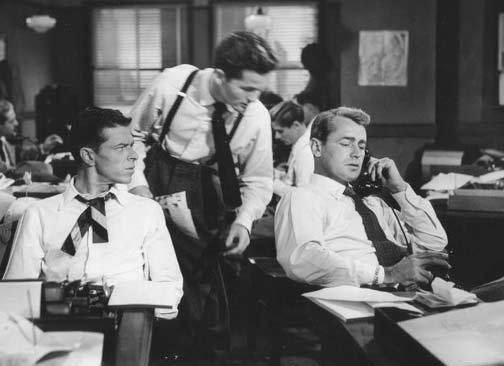
On the surface, Chicago Deadline (1949) feels rather akin to Laura (1944).  In Laura, a police detective becomes obsessed with learning everything he can about a beautiful dead woman and the people who were part of her life.  In Chicago Deadline, a newspaper reporter becomes obsessed with the same basic thing.  The ending goes quite differently from Laura, and I think that the newspaper reporter keeps in better mental health during the movie, but in a broad way, there are definite similarities.

Cynical yet compassionate reporter Ed Adams (Alan Ladd) has tracked down a random runaway girl whose parents called his newspaper in hopes of finding their daughter.  It's never specified if finding runaway girls is a hobby of Ed's, or if he just drew the short straw that day and got sent out on this little errand, or what.  He's certainly good at tracking people down from very slim clues, so maybe he gets assigned these sorts of jobs regularly.  He cracks wise with the landlady and the runaway girl, but you can see he is genuinely glad the girl will be going home safely before anything untoward happened to her in the big city.

He's just told the runaway to pack her things when a cleaning woman down the hall screams in terror.  Ed rushes over there and discovers a dead woman lying in bed.  He peers at her face and diagnoses her as having died of a "hemorrhage," probably from tuberculosis.  The audience only gets to see people's reaction to her, not her face or anything more than the back of her head and the vague shape of her body under the covers.

Ed quickly goes through the dead woman's belongings, starting with her mostly unpacked suitcase and proceeding to her handbag.  There, he finds her datebook, which he pockets.  I suppose, since she appears to have died of natural causes, he isn't actually removing or withholding evidence from a crime scene, but it's definitely not a particularly honest thing to do.  Ed also drags that runaway girl into the bedroom and shows her the dead woman, warning her that she could have ended up dying alone in an anonymous bedroom too, if she didn't have parents who called the police and the newspapers and everyone else they could think of to try to find her.  The girl is suitably chastised and subdued.

Ed asks the landlady who the dead woman was.  She says she was named Rosita Jean d'Ur (Donna Reed), and she'd rented the room less than a week earlier.  Ed tells the landlady to call the police, then leaves with the runaway girl in tow, bound for the train station so he can send her back home where she belongs.


Ed goes back to the newspaper office where he belongs and starts flipping through the dead woman's date book.  It appears Rosita had a lot of friends, but she didn't supply full names for most of them, only first names or initials.  Ed starts calling the numbers, figuring if he learns a bit about Rosita, he can write a human interest piece about her and why she died all alone.

But everyone he calls has very odd reactions to his asking if they knew her.  Several deny knowing who she was.  One person checks out of her hotel an hour after speaking with him.  Others demand he explain how he got their phone number.  Ed's newshound nose smells a much bigger story, and he starts digging deeper and deeper into Rosita's past.

By the time he's unraveled the story of her life, he's had run-ins with gangsters and crooks, brushed shoulders with wealthy financiers, interviewed a wheelchair-bound recluse, and gotten tangled up romantically with a lonely socialite.


Ed meets the socialite, Leona Purdy (June Havoc), at a party thrown by someone whose number is in Rosita's book.  Leona knew Rosita for a while, and she liked her a lot, so she starts helping Ed try to piece together the story of Rosita's life.  Before long, they're doing a little kissing once in a while, too.


I wish June Havoc had made more movies with Alan Ladd because I like her a lot opposite him.  They trade quips really well, and they have lovely chemistry.  They have a kind of comfortable rapport that I liked very much.

As a bit of a random aside before I resume relating the plot here, one of the reasons I like this movie so much is that Alan Ladd isn't playing a world-weary loner who gradually regains his own humanity after encountering genuinely nice people who help him rediscover his soul.  I'm not saying he played that character in all his other film noir outings... but it feels like it.  Some of his westerns go that way too.  But his character in this has friends, colleagues, and a steady girlfriend.  It's really refreshing.


Anyway, Ed is also aided by his friend and fellow reporter, Pig (Dave Willock), who tracks down leads for him offscreen and provides backup during a shoot-out in a parking garage.  Have I ever mentioned that I find parking garages very scary?  They always make me feel both trapped and exposed at the same time, and that is probably because I have watched so many movies where people get into shoot-outs in parking garages.  There's only one parking garage where I don't feel even a little bit creeped out, and that's the one at Colonial Williamsburg because it is bright and light and airy, and it has openings everywhere on the ground and second floor, all the way around, so you can get out literally anywhere you want.

Anyway, Ed tracks down Rosita's brother Tommy (Arthur Kennedy), who is deeply saddened to learn Rosita has died.  He fills in a lot of gaps in her life story for Ed, but can't really shed light on why other people keep behaving so peculiarly when Ed mentions her name.  

I'm afraid I don't have any shots of Kennedy to add here -- this movie isn't available on DVD.  It has recently been released to Blu-Ray by Kino Lorber, which is absolutely wonderful!  I've watched it twice this month, and it's been such a delight to have a crisp and clear copy.  I watched it once a few years ago, when all that was available was a murky version that looked like (and probably was) someone aiming their laptop webcam at a TV playing an old VHS tape that had been recorded off cable TV.  So, I'm really excited that this movie is available legitimately on Blu-Ray now... but I can't get screencaps from a Blu-Ray because my laptop only plays DVDs.  Which is why we have this random collection of production stills and lobby cards here.  And no pictures of Arthur Kennedy because they don't appear to exist anywhere.


Skip down to below the next lobby card if you don't want SPOILERS because I am going to explain the plot here.

Unlike the detective in Laura, Ed Adams does not develop an unhealthy obsession with the dead woman.  He does become pretty obsessive about figuring out why people keep trying to stop him from talking about her, though.  It turns out that, after her husband left her in New York City, she returned to Chicago, where she became a small-time gangster's girlfriend, then caught the eye of a wealthy and crooked financier.  The latter paid a big-time gangster to rough up her boyfriend until he promised to break up with her so the financier could become her sugar daddy.  But the big-time gangster liked holding the leverage of what the financier did to get Rosita over said financier's head, so the financier decided she needed to disappear permanently so she couldn't be used against him anymore.  Except the hitman who was supposed to kill her liked her, so he disappeared her instead and told everyone he'd killed her and dumped her body where she couldn't be found.

That's why, when Ed Ames finds her dead in a flophouse and her brother identifies her positively, suddenly creeps are crawling out of the woodwork and shooting each other and committing suicide and shooting at Ed.  Because suddenly, the girl who was supposed to be dead already turns out to have been alive and only died just now, and (almost) nobody knows why.  Everyone assumes someone else is lying and blabbing secrets, and fireworks commence.

It only took me three viewings of this movie to figure out what is actually going on in it.  The whole thing is very convoluted and told in circular flashbacks, basically.  But it does eventually make sense.

END OF SPOILERS.


Don't believe the above lobby card, by the way.  Like the song says, Rosita is not merely dead, she's really most sincerely dead.  Donna Reed never shares the screen with Alan Ladd at all in this -- she only appears in flashbacks.  But Reed and Ladd had co-starred the previous year in Beyond Glory (which I haven't seen yet), and I guess the publicity folks wanted audiences to think they had another Ladd-Reed love story in the works.  Or something. 


Is this a great noir film?  No.  Is it a thoroughly entertaining and enjoyable and rewatchable movie?  Yup.  I like it a lot.

But, is this movie family friendly?  Basically, yes.  Rosita's obviously sleeping with the financier, if not with her previous boyfriend, but that's very vaguely implied.  Her brother may be incestuously attracted to her, but that's also vaguely implied, and it's possible he never revealed his interest to her.  You can kind of read their relationship however you like.  Rosita gets slapped offscreen at one point.  Alan Ladd gets into a fistfight, and there's the gunfight in the parking garage that I mentioned earlier.  And someone commits suicide.  But, despite the ominous warning on some of the lobby cards and posters for the film, it's really not particularly unsuitable for children.  It's also not intended for kids, though -- I can't see most youngsters being interested in it.  Teens, sure.


Today is my 8th Alaniversary!  Eight whole years devoted to Alan Ladd... and counting :-D

Thursday, May 25, 2023

What Makes Me Want to Watch It?

I recently posted a list of ten things that make me want to try out a book over on my book blog.  I had so much fun figuring those out that I thought I should do the same about movies.  What makes me think, "Yup, that is something I would like to watch?" about particular films?  I've come up with ten magnets that will always draw my attention.


1.  It's a western.  I will try basically any movie or TV show based solely on the fact that it is a western.  I don't have to know what it's about.  I don't have to know or care about anyone who's in it, the director, the composer, anything.  It's a western?  I'm there.  (With the obvious caveat that, if I learn it's skanky, I will either proceed with caution or skip it.)

2.  It stars someone I hold dear.  For a fairly large number of actors and actresses, not even remotely limited to my top favorites (actors, actresses), I will try nearly any movie or show.  Nearly -- I do have some standards, so even top favorites occasionally have made something I will pass on.  But the presence of someone I hold dear ties with "it's a western" for the top thing guaranteed to get me to watch something.

3.  It's set during WWII.  I mean, my top favorite TV show of all time (Combat! [1962-67]) is based in WWII.  That should tell you a lot.  A WWII-era setting, whether it's a war zone or the home front, will always grab my interest.

4.  It's based on a good book.  Bonus points if it's a classic book, but yeah, I love movies that are adaptations of books!  I often watch them first to find out if I like the characters and story, then go read the book if I do.  That makes the book feel like an expanded version of the story, rather than making the movie feel like a condensed version of a book I've read.

5.  It has heroes in it.  Yes, that includes superheroes, but it includes a lot more than that, too.  You throw words like "hero," "rescue," "sacrifice," and "courage" at me, and I am instantly paying attention.  I do enjoy superhero movies, but it's heroism in general that draws me to so many action movies, fantasy and sci-fi movies, and so on.  Westerns and war movies appeal to me because they so often involve heroes.

6.  It's film noir.  Got some gritty stories and mean streets and fatally attractive women and weary almost-heroes and murky shadows you could drown in?  I'm here for it.  Yes, heroes are thin on the ground in this genre, but they're there.  And antiheroes abound.

7.  It revolves around a platonic friendship.  If there are two characters who have or form a close bond of friendship, and that's the main relationship that the story centers around, I am interested right away.  So many of my favorite movies and TV shows revolve around either a pair of friends or a group of them!  "Found families" play into this -- group friendship bonds interest me just as much as a friendship between just two people.

8.  It's set in the 1960s.  My husband likes to tease me that I grew up in the sixties.  I didn't -- I wasn't born until the eighties -- but when I was growing up, most of the movies and TV shows we watched at home were made in the sixties because that's when my parents grew up, so that's what formed their taste.  And so, it's what formed my taste.  Whether a movie or show was made in the sixties or later on, if that's when it's set, I want to try it out!

9.  Someone I trust tells me I would like it.  I definitely will try movies just because specific people tell me I should.  My parents, my brother, DKoren, and two or three other people can get me to watch a movie on their recommendation alone.

10. It has a detective in it.  Yes, I love mysteries.  I particularly love to read them, but I enjoy watching them too.  Many of my favorite TV shows revolve around detectives solving crimes, and I like movies about them too.

So, basically, if it has a certain setting or specific types of characters, or simply stars particular people, I'm interested!  

Friday, February 17, 2023

My Ten Favorite Alan Ladd Roles


Happy Alaniversary to me!  Seven years ago today, I fell hard for Alan Ladd, and I haven't recovered.  Nor do I want to ;-)  Today, I'm celebrating by sharing my ten favorite roles Ladd played.  I have seen about thirty of his movies (many of them over and over and over) by now, and reviewed nearly two dozen of them, but I've never really stopped to figure out who my favorite characters of his were, other than the top three, which I have long loved best.

It amuses me how differently things are ranked here from my Ten Favorite Alan Ladd Movies list and my Ten Favorite Alan Ladd Westerns list.  In fact, there are three characters on here whose stories don't appear on either of those lists!  So interesting how I can love a character more than the movie they're in, or a movie more than the characters in it.


1. Shane in Shane (1953)

Shane has so much dignity, grace, courage, integrity... it's no wonder that this performance is the one Ladd is remembered best for.  His past and future are mysteries, but we can tell he's haunted by his past, which clearly involved being a gunman.


2. Luke "Whispering" Smith in Whispering Smith (1948)

Luke Smith is a railroad detective, basically.  He's another upright, brave, uncompromising guy who puts others above himself and stands up for what's right even if it means great personal sacrifice.  It was watching Whispering Smith and Shane back-to-back that made me fall for Ladd in the first place :-)


3. Dan Holliday in Box 13 (1948-49)(radio show)

Holliday is a former newspaper reporter who decides to try writing fiction.  To get ideas for his stories, he puts an ad in the paper that says he's seeking adventure and will go anywhere and tackle any problem.  This leads to a whole lot of mysteries to solve, crimes to investigate, people to rescue, and other sundry adventures.  I've actually been a fan of this radio show longer than I've been a Ladd devotee!


4. Choya in Branded (1950)  

Choya is a drifting loner with a streak of decency.  Even when he's mixed up in something illegal, he ends up doing the right thing to help and protect others.  And standing up for others helps him realign his own moral compass in the process.


5. John Chandler in The Proud Rebel (1958)

Chandler is a kind, loving father who would do anything to help his young son be able to speak again.  He's a former Confederate soldier who lost everything but his son during the war, and his attempts to build a new life for them both are heart-melting.


6. Captain Webster "Web" Carey in Captain Carey, USA (1949)

Web Carey is a brave and honorable guy who believes he was betrayed by the woman he loved back when he was a spy during WWII.  When he discovers that everything he believed about that betrayal may have been a lie, he'll do whatever it takes to learn the truth.  Even if that might break his own heart all over again.


7. Thomas O'Rourke in Saskatchewan (1954)

O'Rourke was raised by Canadian Indians, but is now a member of the Royal Canadian Mounted Police.  He tries everything to keep peace between native tribes and white settlers, putting his own safety and reputation on the line repeatedly.


8. Dr. Merek Vance in And Now Tomorrow (1944)

Merek Vance is one of the characters Ladd played the most earlier in his career -- a cold, calculating man who is not interested in kindness or friendship or love... until he meets a girl who brings out the good parts of himself he's kept hidden inside.  In this case, he's actually a good guy, a philanthropic doctor who spends most of his time treating poor people who can't afford his treatments.  He just is more interested in science than his patients... until now...


9. Major Larry Briggs in Saigon (1947)

Briggs and his two pals, all ex-GIs, are only really interested in making money.  He definitely doesn't like or trust women, as you can see from the picture above.  He and his buddies are loyal to each other, but don't care much about anyone else until... 


10. Jay Gatsby in The Great Gatsby (1949)

Poor Jay Gatsby.  Hopeful, yearning, always reaching for what he can't have, never ready to give up on his great dream.  Betrayed, hurt, wistful... Gatsby is pretty much tailor-made for Alan Ladd to play.


This has been a really fun list to come up with, and I may have to do similar gatherings of favorite roles for other actors and actresses I love!  It's rather different from just "favorite films," and I like that.

Monday, May 16, 2022

Four Noir Films from Ladd and Lake


It's National Classic Movie Day today! Not only that, but Classic Film & TV Cafe is hosting the Four Favorite Noirs Blogathon today to celebrate -- read this post of theirs for links to all the participants.

For this event, I will be sharing some thoughts about the four noir films that Alan Ladd and Veronica Lake starred together in.  I have fully reviewed all four of these previously, so I will link to those individual reviews as we go, too.


This Gun for Hire (1942) was Alan Ladd's big break.  In it, he plays a baby-faced killer, Raven, a type that became very popular after this movie.  Ladd brought such a powerful mixture of innocent charm and remorseless violence to the role that it became obvious to the filmmakers that they had a new star on their hands.


Hitman Raven is double-crossed by his employer (Laird Cregar) at the beginning of the movie, and he spends the rest of the story gathering evidence so he can get revenge.  It just so happens that the heroine, Ellen (Veronica Lake), is gathering evidence of a very different sort about the same man to help the authorities catch him for selling military secrets to America's enemies.


Veronica Lake's star was on the rise when she made This Gun for Hire, as she'd just made a big splash with Sullivan's Travels the year before.  She has a sweet charm, not the sultry sort we find in noir so often, which makes her kind of refreshing.  Her character Ellen is not a femme fatale, but a good girl trying to do the right thing in a tough situation.


Ellen and Raven technically don't fall in love.  They do eventually form a tentative friendship, but it's short-lived.  Still, they get some wonderful scenes together, and Ladd and Lake had very good chemistry.  So, the studio rushed to put together another film for them to star opposite each other in.


The Glass Key (1942) capitalizes on the antagonistic chemistry that sizzled between Ladd and Lake.  It's based on a hardboiled detective novel by Dashiell Hammett (read my review of the book here) that had been made into a movie once before, in 1935, starring George Raft.

The story revolves around Paul Madvig, a criminal organizer (Brian Donlevy) who decides to enter politics.  He falls in love with wealthy socialite Janet Henry (Veronica Lake), but she scorns him while secretly admiring his right-hand man Ed Beaumont (Alan Ladd).  When Janet's brother is murdered, both men fall under suspicion for the killing, and only one of them has the brains and guts to figure out the truth.


Alan Ladd carries his first real starring role pretty well, though I sometimes get the sense that he was feeling a lot of pressure to act extra tough and extra cool in this.  


Ed Beaumont's nemesis is a thug named Jeff played by William Bendix. While shooting one altercation early in filming, Bendix failed to fully pull a punch and knocked Ladd cold.  That may sound like a weird basis for starting a friendship, but the two of them became fast friends and were close for years and years after.


Veronica Lake plays aloof and skeptical for most of the film, which is very different from her earnest and kind character in This Gun for Hire.  She pulls off the role just fine, letting us see her interest in Ladd's character even while she pretends to disdain him.


Lake and Ladd's characters do get to exchange some combatively romantic dialog, but their love story isn't exactly central to the movie's plot.  That would change in their next outing together.


The Blue Dahlia (1946) does give Ladd and Lake a romantic pair to play.  But, even here, their romance is a by-product of the plot, it doesn't fuel it.  


Three military buddies freshly mustered out of the military return stateside to resume their normal lives.  Buzz (William Bendix) and George (Hugh Beaumont) were part of the bomber crew led by Johnny Morrison (Alan Ladd).  Though George and Johnny bear no physical effects from their time in service, Buzz had a head injury that has left him moody and unpredictable.

George and Buzz set off to find an apartment together, but Johnny has a wife and a home to go to.  The only trouble is, his wife (Doris Dowling) is a party animal who's cheating on him with a nightclub owner (Howard da Silva).  When the wife ends up dead, Johnny is suspected of murdering her and has to race to clear his name.  He inadvertently meets up with the nightclub owner's estranged wife Joyce (Veronica Lake), and the two share some sympathetic moments before they learn how their lives have already been tangled up thanks to their unfaithful spouses.


Ladd is in top form in The Blue Dahlia.  He spits out angry one-liners while letting you see the ache behind the anger at the same time.  His character is a man displaced, a misfit who changed so much during the war he doesn't know where he belongs anymore.  Ladd gives him a desperate edge that keeps the audience guessing as to whether or not he did kill his wife, right up to the end.  But he also projects this innate kindness and decency that makes you really hope he didn't do it.


Veronica Lake plays one of only two thoroughly upright, good characters in the whole movie.  She's a good girl in a bad marriage, but she hasn't let it harden or roughen her, which clues the audience in as to just how strong she is inside.


Lake and Ladd's characters don't get to do much more than yearn for each other and trade snappy dialog for the bulk of the film, but the audience has no trouble believing they will see a lot more of each other after the story ends.

In fact, the two of them are so good together that it's a shame they only made one more movie together after this one.


Saigon (1947) is the only one of these four movies not readily available on DVD right now.  I hope that will change!  You can sometimes catch it on TV, at least.

This is another tale of three military friends after the war, one of whom is not physically well.  Major Briggs (Alan Ladd) and Sergeant Rocco (Wally Cassell) are keeping a terrible secret from their buddy, Captain Perry (Douglas Dick):  he has a brain condition that could kill him any day.

The three of them use their flying skills to make money flying cargo planes around Southeast Asia for basically anyone who needs something flown somewhere.  They take a job flying a rich guy and his secretary Susan (Veronica Lake) to Saigon but, thanks to a last-minute gunfight, only the secretary catches the plane.  Perry promptly falls in love with Susan, and Briggs does too. Briggs won't admit he's in love to anyone, including himself, but Perry turns into a lovesick puppy.  Susan learns about the brain injury and is kind to Perry, and she is definitely not attracted to Briggs because he is mean and crabby, and never says nice things to her.  Definitely not attracted.  As you can see from the production photos here.

A whole plot involving smuggling ensues, just to keep things interesting.  Saigon is generally classified as film noir, but it's the least noir of these four, in my opinion.  But it's still a really fun ride.


Although their characters spend most of the film distrusting each other, snapping at each other, and generally being as unpleasant to each other as they can, you can always feel the crackle of attraction between Ladd and Lake's characters.  The best part of this movie is watching their scenes together, two total pros who know exactly how to bring out the best in each other.


Although the characters they're playing aren't my favorite pair of the four pairs they play, I think Lake and Ladd are the most fun to watch in this one.  They're clearly very comfortable with each other, after making three movies together before this, and that lets them both relax and turn in awesome, confident performances.


Plus, they get a Really Good Kiss in Saigon :-)  That doesn't hurt at all.

I hope you've enjoyed this little collection of my thoughts on these four films.  Happy National Classic Movie Day!  I don't know how you plan to celebrate, but I'll be watching Alan Ladd play The Great Gatsby (1949) with a friend this evening...