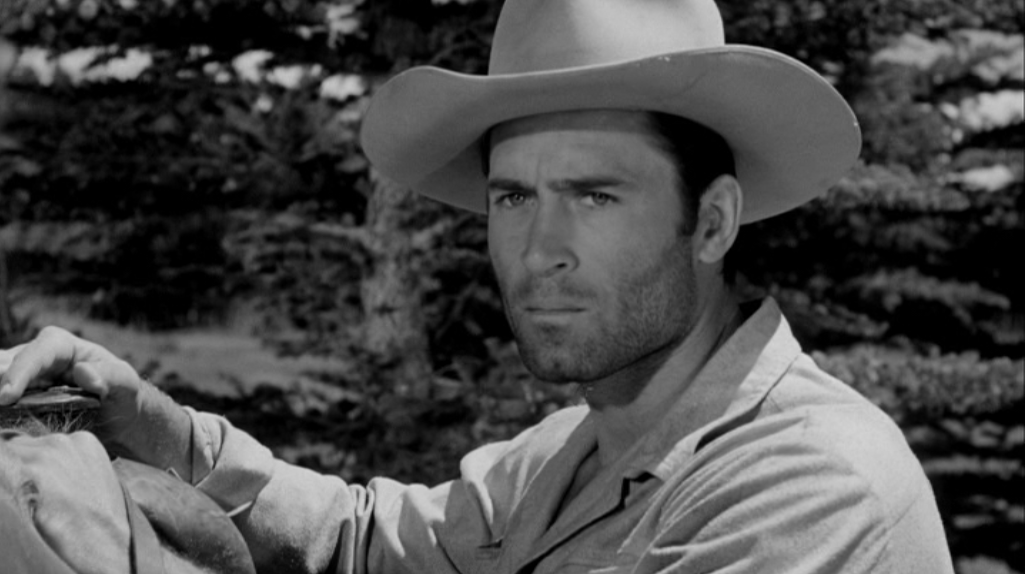
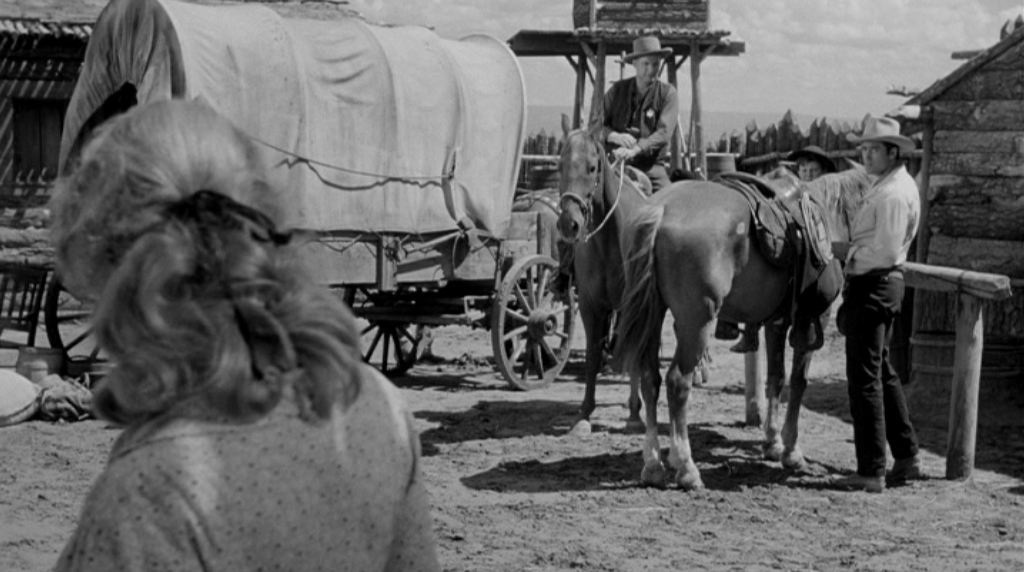
Showing posts with label Vic Morrow. Show all posts

Sunday, March 22, 2026

"One More for the Road" -- A Favorite "Combat!" Episode

I love to show people this episode as an introduction to my favorite TV series.  It's really approachable and relatable, and shows off most of the main characters really well.  If I don't have time to show them "The Long Way Home, Parts 1 and 2," I show them "One More for the Road."  

In fact, I used this episode to re-introduce my teens to this show recently.  I'd shown them a few eps over the years, but they never really got into the show.  I have patiently waited for them to be ready to love it, and I think we are getting there!  After watching this ep, they asked to see more, so we have watched a couple more eps since, and I'm slowly pulling them deeper and deeper into the fandom, bwahahahahahahahahaha!


Okay, enough maniacal laughter.


Combat! (1962-27) has been my favorite TV show since 1994, when I was in my early teens.  I've never seen anything else I love nearly so much.  And this is one of my top favorite episodes.  So I'm going to review it lovingly and thoroughly today :-)


The episode begins with The Squad engaged in a firefight with some Krauts who have a machine gun.  Once we take care of that, Kirby (Jack Hogan) gets sent to clear out an abandoned barn behind the machine gun nest.  He hears a noise, reflexively fires a few rounds toward it, and then is mortified to discover what he was shooting at.


Mouthy, rowdy tough guy Kirby... almost shot a baby.  And when I say he is shook, I mean he is shook.


Which, when you see how cute this baby is, is pretty understandable.  Look at that sweet face!  The baby is played by The Monroe Twins, who have no other screen credits, but clearly were very photogenic!


This episode is directed by Bernard McEveety, who directed a total of 31 Combat! episodes.  He's a lovely director for an ensemble show like this because he knows how to give the characters all their own moments to shine and their own closeups, and also how to show them interacting in groups.  In this particular episode, we have a lot of shots that are composed to show Sergeant Saunders (Vic Morrow) a bit distanced from his squad.  He can't be their pal; he has to be their leader.  I'll showcase a few more of those throughout this review.  It's subtle filmmaking, and so effective.


The Squad is currently behind enemy lines.  Saunders learns, via the handytalky, that the American lines are going to be advancing, and the area where they're skulking about is going to get shelled at a specific time.  His orders are to get his squad back to the Allied side of the river before that shelling starts, lest they get hit by their own artillery.


Isn't this a lovely shot of four regular characters?  Caje (Pierre Jalbert), Billy Nelson (Tom Lowell), Littlejohn (Dick Peabody), and Kirby all assume that they'll be taking this baby along with them as they retreat.


Series semi-regular Brockmeyer (Fletcher Fist) thinks so too, but he's much less shocked about what happens next.  Random ENG (Expendable New Guy) Stroback (Don Edmonds) hasn't been around long enough to have a real opinion one way or another, I don't think.


Doc (Steven Rogers) is so sure, he's got the baby all bundled up and ready to go.  But Saunders shocks them all.

The baby stays in the barn.


This is not because Saunders hates babies.  This is not because Saunders thinks a baby's life is not worth saving.  It's exactly the opposite:  Saunders knows how dangerous it is going to be to get his men back through enemy territory and across that river before the shelling starts.  He doesn't want to put the baby in that kind of danger.  He tells the men the baby will be safer in the barn, and they'll do their best to find a civilian and tell it about the baby before they get back across the river.


And here's another amazing shot chock-full of people, with Saunders just a bit removed from the squad.  The men let him know just how unhappy they are that he's abandoned that baby, and he bears the brunt of their criticism for a long time.  That's part of his job.  He has to make decisions, and it doesn't matter if they are popular or not -- they just need to be correct.

But Saunders has a soft heart.  We know from other episodes that he has multiple younger siblings.  He had a sweet little moment with the baby where he handed it back its rattle and touched its head in what feels almost like a blessing.  Everything in him did NOT want to leave that baby alone.

And, eventually, he relents.  They haven't found any civilians, and they haven't run into any Krauts, so maybe it's safe for a couple guys to run back and get the baby and take it with them.  He finds a convent on his map and says they should be able to get the baby to the convent and still get back to their own lines before the artillery barrage.


Next thing you know, you've got eight men doing everything in their power to take care of that baby.  If you're getting 3 Godfathers (1948) vibes, you're not alone.  

Every single one of these guys is willing to risk his own life to see to it that this baby is safe.  It's so heroic and manly and wholesome that I could swoon.


Saunders still stays apart from the group.  The other guys take every opportunity to coo over the baby, tickle it, sing it a song, and generally overload it with love.


The composition of this shot is sooooo good, isn't it?  The arms pointing to the baby in the center, the protective circle around it of all those heads and helmets.  It's like a Renaissance painting.


Various adventures befall The Squad.  They get delayed.  They have to discard plans and make new ones.  The baby almost dies.  And then, a soldier does something stupid and dies, and look at that sorrow in Saunders's eyes.  If the soldier had listened to him, had obeyed orders, he would have stayed safe and alive, but he didn't.


Another grouping, as the guys process the loss of a buddy, and Saunders is not quite part of them.  Leadership is a lonely job.


We do finally make it to that river.  Crossing it is tricky and perilous.


So tricky and perilous that Brockmeyer must remove his jacket AND shirt so that we can all fully appreciate his physique.  He's so kind and thoughtful.

I'm going to SPOIL the ending of the episode, so if you care about that at all, jump down to the blogathon banner, okay?  I'll keep details kind of vague, but you will learn who survives to the end...


Caje executes a dangerous and cunning plan to get the baby across the river without drowning it.  And looks so nice in his borrowed disguise!


Saunders and the remains of the squad wait anxiously for Caje.  Brockmeyer takes his own sweet time getting dressed again.  Not like we're in a hurry to escape a barrage or anything here.


Annnnnnd we don't escape the barrage.  We get stuck in it just a weency bit.  The baby once again falls into Terrible Peril, and this time, it's Saunders who leaps to the rescue.  He's spent the entire episode refusing to touch the baby after they decided to bring it along.  He's given numerous lectures on how much danger they're putting the baby in, and how much danger the baby is putting them all in.  The men in his squad have kind of convinced themselves he doesn't like this baby at all.

And then they see just how wrong they were.  Because not one of them jumped to the rescue and covered that baby with his own body to protect it from debris and possible shrapnel.  Only Saunders did.


Which is why, when they finally do reach a convent where they can leave the baby in safety, they insist Saunders do the final bit of delivery.  

And man, is Vic Morrow just completely adorable with that baby in his arms!  He had two daughters of his own by the time this was filmed, one of them still basically a baby herself, and you can tell he's very comfortable holding babies, unlike a few of the other guys in the squad.  I think that works well for his character -- the episode "Just for the Record" establishes that he has a teenage sister, so we can assume he was old enough to carry her around when she was born.  It's assumed that his father is dead, and that he has stepped into a fatherly role for his younger siblings ("Mail Call," also directed by McEveety, shows that pretty clearly), and you absolutely see that fatherly side come out in this last scene.  

And it changes your perception of how Saunders has behaved throughout the entire episode.  He didn't think that baby wasn't worth protecting.  He didn't think it was a nuisance.  Time and again, he made the best decisions he knew how in order to keep it safe AND keep his men safe.  Just as a good sergeant should.


And we all have to say goodbye to the cute, cute baby and go back to the regular war, all a little wiser than we'd been before.  Yes, even including Saunders.  


This has been my contribution for the 12th Annual Favourite TV Show Episode Blogathon, hosted this weekend by A Shroud of Thoughts.  

(I was already planning to use the above button, but losing Nicholas Brendon this past week would have made me switch to it if I hadn't planned to use it.)

Friday, March 21, 2025

"The Avenger" (Bonanza) 1960

I will be blunt: the reason this is my favorite Bonanza episode is because of the guest star.  Vic Morrow is a dear favorite of mine, and I absolutely love getting to watch him play a good guy in a western.  He was in quite a few classic western shows, but almost always playing the heavy, sometimes playing very sinister and nasty baddies indeed -- and I enjoy those in a certain way, but not in the way I enjoy seeing him play a good guy.


I remember watching this episode for the first time in my teens, watching it with my whole family as part of our weekly Friday Night Movie Night family time.  I went in knowing he was the guest star and being pretty sure he was going to be the bad guy because that was how it had gone with all the eps of other westerns I'd seen him in.  You can imagine my delight when he proved to play not a bad guy, but not even an antagonist!  He plays a hero!  Oh joy, oh rapture unforeseen!

A stranger (Vic Morrow) rides into a town that positively drips ominous foreboding.  No people on the streets.  A saloon filled with toughs who are raucously celebrating the completion of a gallows in the middle of town.  Bad stuff is about to happen here.  Bad stuff has already happened here.


And then we discover that the two men in jail who are going to be hanged that night... are Ben and Adam Cartwright (Lorne Greene and Pernell Roberts).  Those yahoos in the saloon are eager to dance and spit all over their graves.  The stranger finds this disturbing, but he's a quiet guy not looking for trouble.  At least, not looking for this particular trouble.

Actually, he's looking for a group of men who lynched his father and killed a lot of other innocent townspeople a few years ago in Lassiter, Kansas.  Because he never shares his name in this episode, folks take to calling him Lassiter after the town he keeps talking about.  

Thanks to his family history, Lassiter is very sensitive to wrongful hangings, even when they're carried out by the law and not by a lynch mob.  He becomes convinced that Ben and Adam are innocent.  Their conviction hinged on the testimony of one scared hired man and one angry young woman -- and the hired man has been murdered, while the young woman is seeking to punish the Cartwrights for her father's death whether they were actually guilty of killing him or not.


Vic Morrow plays Lassiter with exquisite gravitas.  He's calm, steady, soft-spoken, and unflinching in his quest to find his father's killers and bring them to justice.  He doesn't waste a single movement; every flicker of his eyelids, every sideways glance, every raised eyebrow speaks as much as his dialog ever does.  This is a man who will not fail, and the audience knows it.  The people of this town know it.  Even Hoss and Little Joe Cartwright (Dan Blocker and Michael Landon) realize it, and agree to let Lassiter try to save their father and brother first before they start throwing lead at everyone in sight.

Obviously, Ben and Adam don't hang.  Obviously, the guy trying to get them hung is one of the men Lassiter is trying to find.  Obviously, Lassiter's calm logic and insistence on seeing truth and justice served are what save the Cartwrights.  There aren't any huge surprises here... unless you are used to seeing Vic Morrow play baddies in westerns, and discover to your great joy that he is playing a very good guy indeed here.


Honestly, "The Avenger" doesn't really feel like a typical Bonanza episode... because it wasn't.  It was supposed to serve as a pilot for a spin-off series starring Vic Morrow.  Another pilot of sorts was filmed as an episode of the lesser-known show Outlaws, with Morrow playing the same character and tracking down another of his father's murderers.  But the network never picked the show up.  

Part of me is sad about that, because Lassiter is really cool, and I would love to have a whole western show starring Vic Morrow to watch over and over and over.  But part of me is okay with it, because if Vic had made a success in that show, he might have been under contract when they started casting the series Combat! (1962-67) and unable to be in that.  And that would have been horrible, because that is my favorite TV show of all time, and his character, Sergeant Saunders, is my favorite fictional character ever.  So, I just keep enjoying this episode every now and then and don't mourn too much over the series never happening.

You can watch this episode basically anywhere because it's in the public domain.  It's easy to find on streaming platforms, YouTube, DVD, etc.


This has been my contribution to the 11th Annual Favourite TV Show Episode Blogathon hosted this weekend by A Shroud of Thoughts.

Sunday, December 17, 2023

"Fort Dobbs" (1958)

This is far and away my favorite new-to-me movie of 2023.  I've watched it five times since discovering it early in the summer.  I would have watched it more than that if my movie time wasn't so limited these days.  It absolutely delights me!  

By the way, I am not going to mark spoilers here.  I tried, but it just got silly.  You've been warned.  I really love the writing and acting in this film, and it has lots of lovely surprises that I can't help but gush about.  It was co-written by Burt Kennedy and George W. George, both of whom went on to write for my favorite TV show, Combat! (1962-67) (and Kennedy directed some eps, too).  George's episode is kind of a stinker, but two of Kennedy's episodes are among my top favorites.  So I love that connection to this movie.

Anyway, the story line for Fort Dobbs (1958) is pretty simple: A man, a woman, and a child try to reach the safety of a cavalry fort during an uprising of hostile American Indians.  But each character is so complex, and the story is unfolded so expertly, that the movie is completely engrossing.


Gar Davis (Clint Walker) opens the film, riding into town looking grim and unhappy.  When the local sheriff (Russ Conway) asks why he's there, Gar says he's looking for a man so he can kill him.  He then stalks up to a run-down shack and goes inside.  Someone inside shoots out through the front window, and we hear two more shots, but we never see any of that shooting, either who is doing it or what its results are.  What happened in that shack is open to interpretation, and all of that is such an interesting way to introduce the hero of the picture!  Is he a good guy?  Is he a bad guy?  Why did he want to find and kill another man?  And what exactly happened inside that shack?  Man, that is such great storytelling, making the audience wonder all of that with just a few short minutes of screen time and minimal dialog.


Another thing I love about Fort Dobbs is how much storytelling happens visually, with no dialog needed at all.  The next bit of the story is just Gar Davis lighting a shuck outta that town and riding hard across some barren and forbidding sections of Utah.  He happens on a dead body, a man shot through the back with an arrow.  We learn right there what a quick-thinker Gar is -- he trades coats with the dead man and then pushes his body off a cliff to where it will be visible to the posse on his tail, but not easy to identify.  His distinctive coat, and the presence of his horse standing around waiting beside the cliff's edge, should trick the posse into thinking that dead body is him.  Oh, and all of that is conveyed absolutely silently, no dialog needed.  Masterful stuff.


His ruse works, and the posse turns back.  Gar walks his way through some rough country until he happens on a small, isolated homestead after nightfall.  He starts to take one of their horses, but a shot rings out, and he falls to the dirt, senseless.  Again, no dialog, no explanation. 


So far, everything we know about Gar Davis should make viewers distrust him.  He sets out to kill a man, he's involved in a shooting, a posse chases him, he uses trickery to escape them, and he tries to steal a horse.  It's a testament to Clint Walker's innate likability that we can't help but root for him through all that, but I think there's another reason viewers (or, at least this viewer) are willing to hope things go well for him:  he outright told that sheriff who he was looking for and that he meant to kill the man, and the sheriff did not try to stop him.  He warned him not to do it, but he didn't try to stop him.  We don't know why yet, but that certainly puts Gar's actions in a less-than-dreadful light.

Anyway, when Gar wakens in the morning, he's still lying in the dirt, but his head wound has been cleaned and bandaged.  He's surrounded by chickens pecking at the ground for food, a scene that would be laughably domestic if it wasn't for the little boy named Chad Gray (Richard Eyer) perched on a fence, brandishing a rifle.  Chad announces, with great pride, that he shot Gar because Gar was trying to steal a horse.  This kid is a straight-shooter both literally and figuratively.  He's still at an age where the world is black and white, good and bad, right and wrong, with no gray allowed... and into his life has ridden this morally dubious anti-hero on a self-destructive path of retribution and aggression.  If you ever want to write something really dramatic, just pair up those two kinds of characters and watch the sparks fly, y'all.  


Chad's mother, Mrs. Gray (Virginia Mayo), is a stubborn but sensible woman.  She says her husband should be back from town any time, and she turns down Gar's offer to escort her and Chad to Fort Dobbs since there have been rumors of a Comanche uprising.  For a few minutes, it feels like we stepped into the beginning of Hondo (1953), but the film merely nods to that earlier western and then continues going its own intense way.


After a brief, fierce battle with some marauding Comanche warriors, Gar sets about packing up the supplies they'll need if they're going to make it to Fort Dobbs.  Mrs. Gray wants to go to town instead, to find her husband, but Gar insists on heading for Dobbs.  Still arguing, the three of them ride off into the night while the Comanches burn the Gray homestead to the ground behind them.

Out on the trail, Gar Davis takes charge, not claiming the right to do that because he is a man, but because he has experience dealing with the Comanche and with crossing that particular patch of country.  Mrs. Gray foolishly tries to do things her own way instead of listening to his experienced advice and ends up endangering her own life as well as his when she loses control of her horse while crossing a river alone.  


Of course, this is a great excuse to get the well-built Clint Walker out of his shirt, but it's also an important bit of character development for both Mrs. Gray and Gar Davis.  Mrs. Gray learns that doing things her own way just to prove that she doesn't like being bossed around is dangerously stupid.  And Gar Davis begins to realize the very real and serious responsibility he has taken on by leading this woman and her child off into the wilderness.  He risks his life to save hers, and seems almost surprised to find himself doing so.  We start to see that here is a man who has put himself first for a lot of years, but who is discovering that he can't in good conscience do that anymore.


Mrs. Gray wakes up wrapped in a blanket, with a shirtless Gar Davis nearby, and has a very worried moment of wondering just exactly what happened while she was unconscious that resulted in her clothes all hanging from a line strung between two trees.  Then she sees her son Chad sleeping peacefully nearby, snuggled up in a blanket himself, and she relaxes.  Again, another powerful bit of storytelling that needs zero dialog to communicate just what is going through this woman's mind.

Back when he was evading that posse, Gar couldn't figure out a way to hide the jacket he took off the dead man when he switched coats with him, so he rolled it up and stuffed it in his saddlebag.  Now, with everyone wet and cold, and most of their clothes wet too, he's used that jacket to help keep Mrs. Gray warm.  And it's probably not a huge shock to the audience when Mrs. Gray suddenly recognizes that coat as her husband's.  It's got a blood-stained hole in the back, and she instantly jumps to the conclusion that Gar shot her husband in the back, and that's why he's taking them to Fort Dobbs instead of back to town.  She confronts Gar about it, and Gar truthfully tells her all about how he found the dead man wearing that coat and switched coats, but that he's running from town over an entirely different matter. 

There is absolute horror in Mrs. Gray's eyes as she stares at this man she's started to trust, but now believes murdered her husband.  And there is a terrible agony in Gar's eyes when he tells her the truth and she refuses to accept it.  It's bad enough to have a posse pursue you because you set out to kill a man and got involved in a shoot out.  He earned that posse.  But to have this woman and her son believe he could be capable of such a thing just rips him up inside.  Which, once again, gets conveyed wordlessly.  Ahhhhhhhhhhh, this movie is so ridiculously good!


Chad overhears this accusation.  He'd begun to idolize Gar Davis, this strong and capable and reluctantly kind man, and the film mirrors Shane (1953) in that way for a little while.  But, once again, it goes its own way instead, and Gar discovers how much he had come to value little Chad's good opinion and the way he looked up to Gar just when Chad learns his mother believes Gar killed his father.  Chad runs off, and Gar has to go find him.  As he sets off to search for Chad, Mrs. Gray says, "How do you tell a boy you killed his father?"  Gar snaps back, "How do you tell a woman you didn't?"  It's one of my absolute favorite moments AND lines.  The anguish mixed with frustration and anger in Clint Walker's face and voice just hits me so hard.


Mrs. Gray and Chad have little choice but to continue traveling with Gar Davis even though they both are convinced he killed their husband and father.  The Comanches are everywhere, and it's going to take a lot of courage and luck and skill for them to reach Ford Dobbs alive.  On the way, they encounter a scummy gun-runner named Clett (Brian Keith) who creepily leers at Mrs. Gray and makes insinuating remarks about her to Gar.  Brian Keith's performance here reminds me so very much of many of the villains Vic Morrow played -- almost eerily so.  I am reasonably fond of Brian Keith and kind of hate how disturbing and icky he is as Clett, which tells the kind of powerful acting Keith is doing, as I am used to him playing kindly and fairly lovable characters.


Gar sends him packing after Clett molests Mrs. Gray, and Clett slinks away burning with hatred and spouting threats.  Gar gets Mrs. Gray and Chad to Fort Dobbs and leaves them just outside it.  He's a man on the run, after all, and needs to get as far away from the area as he can now that Mrs. Gray and Chad are determined to contact that sheriff and let him know it's Mr. Gray who's lying dead at the base of that cliff, not Gar.

And here we have one of my favorite twists in this movie:  Fort Dobbs is not a safe haven after all.  It's full of dead soldiers, everyone there massacred by the Comanche war parties already.  And, just as Mrs. Gray and Chad make this horrifying discovery, a whole lot of folks in wagons come racing into sight, pursued by Comanche warriors.  The gunfire they're exchanging catches Gar's attention as he rides away, and he does not even hesitate a smidgen, but turns right around and rides back to help.

The wagons make it to the fort just in time, and so does Gar.  They shut the doors against the warriors following them and prepare for a siege.  And that's when Gar gets an unpleasant surprise:  those wagons are filled with everyone that's left from the town he's running away from, and they're led by the sheriff who thought Gar was dead.


The sheriff doesn't take Gar into custody, seeing as how Gar's stuck there in the stockade with them.  Instead, he tells Gar he trusts him to return with the sheriff to face justice if and when they both make it out of this situation alive.  And then, while Gar is up manning the battlements with lots of men from town, the sheriff tells Mrs. Gray and Chad the truth about Gar, and about Mr. Gray.  Gar did not kill Mr. Gray, the Comanches did.  Gar instead killed a man who had beaten the woman Gar loved.  That woman was two-timing Gar with this particular man, and everyone in town except Gar knew it, and he didn't find out until the day he shot her abuser.

A lot of writers would give the audience that information about Gar's sad situation right at the beginning of the story, or pretty close to it.  But George W. George and Burt Kennedy held it until close to the end of the movie, after we already have gotten to know and like Gar Davis, and that makes this information so much more powerful.  Now we can understand that haunted look in his eyes, the way he puts off sharing anything about his past, and the reasons why he looked both grim and sad at the beginning of the movie.  Our confidence in him has been justified, and Mrs. Gray's assumptions are shown to be completely false.


I love watching the way Virginia Mayo shows Mrs. Gray reevaluating everything Gar said to her in light of this new information.  Once again, no words are needed to show her processing this, thinking back over what he has told here, and realizing he was being truthful.  And also realizing how much pain and sorrow he has been hiding this whole time.


There's a big Comanche attack, Gar rides off to get help, he and Clett have a showdown, and the settlers are saved.  And then comes the completely wonderful ending.  When everything has calmed down again, Mrs. Gray and Chad are getting ready to leave.  They're going to sell their horses and buy tickets to go back East, where she has family.  

Now, here is another of my favorite things about this movie:  the lack of romance.  You have a beautiful actress and a handsome actor, and not once do they kiss.  There's one tiny moment where you feel they're very powerfully attracted to each other, but it's a passing thing.  For most of the movie, Mrs. Gray doesn't know her husband is dead.  Once she finds out that he is, she thinks Gar killed him.  And, even when she learns that he didn't, she's still a grieving widow.  Gar is also grieving right now, disillusioned about the woman he loved who turned out to be rotten and duplicitous.  It would be absolutely inappropriate for them to fall in love -- and so, they don't.


However!  They still form a sort of family unit dedicated to protecting Chad.  And there is that one moment of attraction to show that, at some point in the future when they have worked through their respective griefs, they could find new happiness with each other.  Which is what makes the ending so perfect.


As Gar prepares to bid Mrs. Gray and Chad goodbye, the sheriff suddenly speaks up and says he figures nobody would mind if Gar saw to it that the Grays made it to their destination safely.  Gar looks confused.  After all, he gave his word that he was going to go back with the sheriff and face justice, even though he's already testified that the man he killed fired first, and the evidence at the crime scene backs that up.  


Slowly, he asks, "You're forgetting something, aren't you, Sheriff?"


"Yeah," says the sheriff with a smile.  And he sets Gar Davis free.  Gar, Mrs. Gray, and Chad ride off together, gladly accepting this new chance at life, at joy, and freedom.  And I've got goosebumps just thinking about that ending!


Is this movie family friendly?  Basically, yup.  Clett does grab Mrs. Gray and force kisses on her while she struggles against him, and they roll over on the ground a couple of times, but that is as far as that goes -- Gar's right there in time to stop anything else from happening and punch Clett in the face for it, for good measure.  There's some tense moments involving Comanche attacks, lots of non-bloody deaths, and a shoot-out between Gar and Clett.  But there's no cussing or nudity or gore, nor any innuendo that Gar might have taken advantage of Mrs. Gray while she was unconscious.  He does mention a couple times that he has to get her and Chad to safety because he knows what the Comanches would do to her if they captured her, though.  But, overall, I'd call this kid-friendly.

I'm not exactly sure how a copy of this film ended up on my to-be-watched shelves, aside from the fact that it stars Clint Walker and I've been a fan of his for decades.  I think I read a review of it on Laura's Miscellaneous Musings that prompted me to pick up a copy, but wasn't a strong enough inducement to get me to actually watch it as soon as it arrived.  Or, I simply didn't have time right then, which is more probable.  Either way, I'm pretty sure I owe having seen this wonderful movie to her.  Thank you, Laura!


This review has been my contribution to the 100 Years of Warner blogathon hosted this weekend by Silver Scenes.

Speaking of blogathons, don't forget to sign up for the On the Job blogathon that I'm co-hosting in January!  I'll be reviewing another Burt Kennedy western for that, but one he directed instead.