Monday, July 25, 2022

Legends of Western Cinema Week 2022 -- Kick Off and Tag


Welcome to all my high-falutin', rootin'-tootin'* friends!  Welcome to this year's Legends of Western Cinema Week, hosted by Heidi at Along the Brandywine, Olivia of Meanwhile, in Rivendell..., and myself.

All week long, whenever you post something for this event, please visit a kick-off post on one of our blogs and add your post to our handy list widget! It should show up on all three blogs, giving everyone easy access to all the contributions.


Don't forget to check out everyone's posts, all week long!  I have quite a few fun things planned myself, including a game and a top ten list, plus my giveaway that I just started this morning.


Here is the official tag for this year:

The Legends of Western Cinema Week 2022 Tag

1) Favorite western focused on a lone hero? 
2) Favorite western focused on a group of compadres? 
3) Favorite western with a female main character? 
4) Favorite western with a POC main character? 
5) Favorite western with kids in it? 
6) Favorite western set somewhere other than the United States? 
7) Favorite "western" that doesn't fit the genre's dictionary definition? 
8) Favorite funny western? 
9) Favorite tragic/sad western? 
10) Favorite western TV show?

Just copy the questions, paste them into a post for your own site, answer them, and gussy up the post with a few nice pictures and one of this year's buttons.  Then come back here and add the link to your post to that list widget above!


*Just in case you don't know, that's a reference to the splendid old song "Ragtime Cowboy Joe"...

Giveaway for Legends of Western Cinema Week 2022


Feast your eyes on the prizes for my giveaway this year!  I have had such a fun time finding and hoarding them for this event.

My movie selections for this have a theme this year -- they're all westerns where a woman plays a pivotal or central role.  We had a discussion last year at some point, somewhere, about how it's sometimes hard to find female-centric westerns, and so I wanted to make it a little easier for at least a few of you to see some of my favorites!

Okay, here's a run-down of the prizes:

Prize One:  The Rare Breed (1966) on DVD, starring Maureen O'Hara, James Stewart, and Brian Keith.  (You can read my review of it here.)  This DVD is brand new and unopened!

Prize Two:  Angel and the Badman (1947) on DVD, starring Gail Russell, John Wayne, and Harry Carey.  (You can read my review of it here.)  This DVD is brand new and unopened!

Prize Three:  Calamity Jane (1953) on DVD, starring Doris Day and Howard Keel.  (You can read my review of it here.)  This DVD is used -- it plays fine for me, but I cannot guarantee it will for you.

Prize Four:  Cat Ballou (1965) on DVD, starring Jane Fonda and Lee Marvin.  This DVD is used -- it plays fine for me, but I cannot guarantee that it will for you.

Prize Five:  Tall in the Saddle: Great Lines from Classic Westerns by Peggy Thompson and Saeko Usukawa.  This book is used, and has a little bending of the front cover, as you can see in the photo.

Prize Six:  Three stickers: two with silhouettes of cowgirls and one that says "I <3 Cowboys."  These are supposed to be dishwasher friendly and long-lasting. 

Prize Seven:  A set of western-themed nail art decals!  They do come with instructions.

If you have a hankering to win any of these prizes, simply use this handy widget:


You'll notice that one way to get extra entries is by leaving a comment on this post giving me your prize preferences. You are welcome to tell me which prizes you DO want to win, as well as any you DO NOT want to win (for instance, if you already own a movie or you never use nail art decals). I can't guarantee that winners will receive their first choice of a prize! But I do try to match them whenever I can.  If you don't tell me your prize preferences, and the widget chooses you as a winner, I will award you a random prize.

Another way to get extra entries is by participating in this blog party with a post of your own. That can be anything from filling out the official tag to writing a review, or whatever you dream up. My official kick-off post provides more information on ways to participate. 

This giveaway is open WORLDWIDE. If the USPS ships to your country, you are eligible. However, you must be 18 or older in order to enter, or have a parent's permission to provide your mailing address. PLEASE make sure you sign into the widget with an email address you check REGULARLY. 

This giveaway runs through 11:59pm EST on Friday, July 29, 2022. I will choose six winners on Saturday, July 30, and announce their names/handles here on my blog.  I will also use the email address provided to contact each winner and ask for their mailing address. Winners have one week to reply. If I do not receive a reply from a winner by Saturday, August 6, I will disqualify that winner and choose a new winner for that specific prize. 

This giveaway is not affiliated with Blogger, Google, the USPS, Rafflecopter, or anyone else. I purchased all prizes myself and will pay to ship them myself. All DVDs are REGION 1 discs and will not play in most DVD players on other continents. Please check the region specifications of your DVD player before you enter if you do not live in North America. 

Any questions? Good luck!!!

Friday, July 22, 2022

From One to Many: What Westerns Tell Us About the Past


When you think of classic western movies, what do you think of? A lone hero walking out into the street to take on the bad guys? Or a group of heroes working together to take on the bad guys? They’re both famous and popular patterns for westerns, and both appear in movies made from 1930 to 1970, but they weren’t both popular at the same time. In his book Sixguns and Society: A Structural Study of the Western, author Will Wright posits that changes in the story construction of movies reflected the changes going on within American society during the period. 

From the 1930s through the mid-1950s, the majority of popular westerns were about lone heroes who saved the weak-but-civilized townspeople or small farmers from the strong-but-uncivilized villains. A great example is Destry Rides Again (1940). Tom Destry (James Stewart) comes to town as a new deputy, proves his dexterity with firearms, and takes on the villain (Brian Donlevy) with minimal help from some comically inept sidekicks. Once he has dispatched the villain, the town is safe for good and decent folks to live in, especially with Destry around as the sheriff. 


Another example is Shane (1953). Shane (Alan Ladd) comes out of nowhere, goes to work for a farmer (Van Heflin), and turns out to be a gunfighter who can defend all the farmers in the area against the greedy rancher who wants to force them off their land. Once he’s defeated the villains, the town is secure, but he feels he can’t stay and enjoy the peace he’s won because, now he’s shown himself to be a gunman, he no longer belongs with the farmers. 

Will Wright ties this lone-hero-who-defends-society pattern to the fact that, in the first half of the 20th century, there was a big emphasis on each individual’s ability to produce goods and services, which depended a lot on “his ability to make himself attractive to the market” (p. 136). Like the lone hero in the westerns, a lone businessman could achieve great things by his own efforts and abilities without having to work closely with anyone else like him. 

But society and its demands changed a lot in the middle of the 20th century. Industries relied on technology more and more, and Wright explains that “technology requires group decision-making” (p. 178). Individuals had to work together more and more, and the need for people who worked independently waned. It was about this time that a very different plot pattern for western movies became popular. 

Instead of one lone hero, you get a group of heroes working together. But the heroes aren’t people who have great gunfighting abilities they end up using to defend people they care about; they are paid professionals who save the day because it is their job. They might also believe it’s the right thing to do, but their primary motivation is that they’re getting paid to do this. 

An early example is Rio Bravo (1959). Sheriff John T. Chance (John Wayne) and his deputies (Dean Martin, Ricky Nelson, and Walter Brennan) refuse to give up a murderous prisoner to his powerful brother, but keep him in jail so he can stand trial for his crimes. They save the weak-but-civilized townspeople because it’s their job. Then they go on living in that same town — they were not accepted into the town because of their special abilities, they already belonged there. 


The most famous example of this later pattern is The Magnificent Seven (1960), in which weak townsfolk hire seven gunmen to save them from a greedy bandit who steals their food every year so he can feed his band of robbers. The seven gunmen become personally invested in this fight, but the reason they got involved in the first place was because they were being paid to do so. And like at the end of Shane, once they have triumphed over the villains, most of the surviving heroes move on because the town has no place for them once their job is finished. 

Will Wright concludes that “[n]arratives explain change; they have a beginning, middle, and end” (p. 192). 

As American society changed during the years when western films were popular, western movies changed too, both to reflect what was happening in the world, but also to help people process what they were experiencing. Humans have used storytelling to make sense of their experiences since time began, and who knows—perhaps in a few decades, we’ll be studying the changes in the superhero films of the 21st century and seeing what changes in our society they correlate to. I, for one, will find that just as fascinating as the way western films helped my parents’ generation deal with the changes they experienced.


(This post originally appeared in Femnista magazine on July 1, 2017.)

Sunday, July 17, 2022

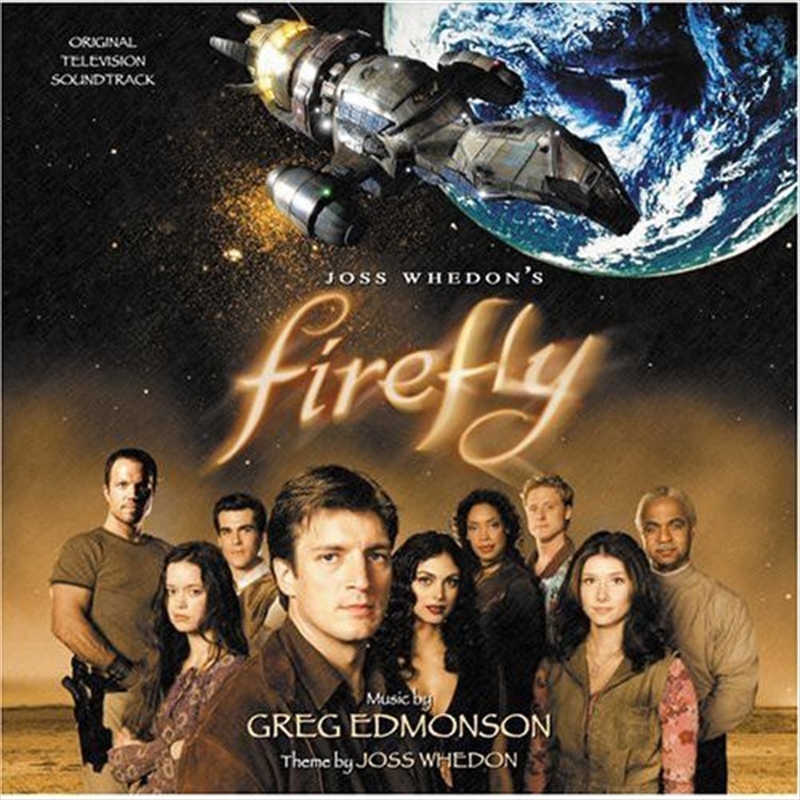
Movie Music: Greg Edmonson's "Firefly" (2002-03)

The soundtrack for Joss Whedon's tragically short-lived TV show Firefly (2002-03) is a lot of fun. Composed mainly by Greg Edmonson, the music is a fascinating blend of east plus west, like the show's culture. You've got twangy banjos and ethereal flutes, pounding rhythm and delicate melodies. It's got such a unique flavor, just like the rest of the show.

"Inside the Tam House" offers a good example of the more eastern music, with lyrical melodies from strings and a flute laid over a trickling piano.

"Mal Fights Niska/Back Home" represents what I think of as the classic Firefly sound -- lots of strings and wind instruments and percussion. I like how this one starts a little slow, then switches to a more actiony vibe, because it definitely gives you the feeling of people facing each other, then starting to fight. Around 1:22, it then flips to the more peaceful and gentle "home" theme that makes me feel cozy and happy.

Hands-down, my favorite track on the whole album is "River's Dance." It's joyful and carefree, which the rest of the album isn't, for the most part. Definitely makes me feel like dancing!

I'm so glad that, although Firefly was short-lived, the powers that be saw fit to release a soundtrack to CD, because I have had many hours of enjoyment from listening to this.

If you've never heard this before, what did you think of it?

(This review originally appeared here at J and J Productions on August 21, 2015.) 

Thursday, July 14, 2022

My Ten Favorite Biopics

I love movies based on the lives of real people.  Whether they're a little fantastical or strictly factual, I find them fascinating.  Of course, there are many movies based on real people that aren't biopics -- they focus on one event or short period in the person's life.  I think it only counts as a biopic if it either covers most of their life or a big part of their career.  Anyway, that's how I narrowed down my list for this post ;-)


Titles are linked to my reviews where applicable.

1. 42 (2013)

Jackie Robinson (Chadwick Boseman) is hired by Branch Rickey (Harrison Ford) to play for the Brooklyn Dodgers, breaking the "color barrier" by being the first black player on a white team.  It's a masterful, respectful, beautiful film.


2. Luther (2003)

Martin Luther (Joseph Fiennes) wrestles with his conscience, Scripture, and the Roman Catholic Church as he slowly comes to terms with the fact that the church needs to be reformed.  A moving portrayal of an ordinary man used by God to do extraordinary things.


3. Beyond the Sea (2004)

Bobby Darin (Kevin Spacey) reflects on his life and career in this mythic musical that tells his story through song and dance.  It's so bouncy and joyful!  Even in the low points.


4. Amazing Grace (2006)

William Wilberforce (Ioan Gruffudd) fights and fights and fights to end England's slave trade.  And he finally succeeds.  A beautiful movie in so many ways.


5. Evita (1996)

Eva Peron (Madonna) climbs Argentina's social ladder any way necessary, eventually becoming its first lady.  This music might get stuck in your head, but that's not really a bad thing.


6. Walk the Line (2005)

Johnny Cash (Joaquin Phoenix) turns anger and frustration into music, falls in love with June Carter (Reese Witherspoon), and finally learns to walk the line.  Masterful performances from both Phoenix and Witherspoon.


7. The Glenn Miller Story (1954)

Glenn Miller (James Stewart) makes music wherever he goes, bolstering the spirits of his family, his friends, and the entire nation.  Mostly a feel-good movie, but not entirely.


8. The Unsinkable Molly Brown (1964)

Molly Brown (Debbie Reynolds) goes from rags to riches multiple times, surviving gold rushes, bankruptcy, and even the sinking of the Titanic!  This is an irrepressibly fun movie.


9. The Wings of Eagles (1957)

Navy flier Frank "Spig" Wead (John Wayne) is paralyzed in an accident, but with the help of his wife Min (Maureen O'Hara) and many friends, he battles his way back to being able to stand on his own two feet.  So inspiring!


10. Miss Potter (2006)

Beatrix Potter (Renee Zellweger) falls in love, writes stories, paints cute pictures, publishes books, and refuses to let anyone stop her from doing any of those things.  It's a sweet, fun mix of cuteness and determination.

Saturday, July 09, 2022

Our Favorite Parts of "Singin' in the Rain"

My kids all enjoy Singin' in the Rain (1952) and we got to go see it on the big screen this past weekend, so I thought it would be fun to invite them to join me in sharing our favorite parts of it with you, in honor of its 70th anniversary.


My 14-yr-old son:

Sooooooooo, my favorite part of the movie was the song "Make 'Em Laugh". I think it's fairly obvious why I like that part: it made me laugh. Other than that, if I'm honest the movie takes about half again as long as it should (even with all the unnecessary silly parts factored into the "it should" part, because silliness is always appreciated if you're me, which you aren't, but you should still appreciate silliness).


My 12-yr-old daughter:

To be honest, my favorite part is kind of the guy with the shirt that says 'Eat at Joe's' during the song "Gotta Dance" because I've been to Joe's seafood restaurant or whatever it's called, and it said that all over the place. So when I saw that, I was like, "Aaaaah that's hilarious!"


My 10-yr-old daughter:

I can't really decide which part is my favorite, because it's always really been a tie between the time that Don Lockwood danced with Kathy Selden in the shed (especially since the door said, Do Not Open or something in that range), or when Don's best friend Cosmo sings "Make 'Em Laugh." They're both great fun.


But I also really love this part of the ballet.  I've always wanted to have that big swoopy cape thing.


Hamlette:

My favorite moment is when Gene Kelly jumps flat-footed all around in a big puddle at the end of his  magnificent "Singin' in the Rain" routine.  It's such an exuberant, joyous moment, and I can't believe he filmed that whole number with a fever of 103F!!!


Singin' in the Rain is actually the first movie our family of five ever saw all together on the big screen, back in 2017.  You can read about that experience here.


This post has been my (our) contribution to the Singin' in the Rain Blogathon hosted by Classic Movie Muse this weekend.  Check it out to bask in all the joy!

Saturday, July 02, 2022

A Sword and a Smile: Zorro

Zorro! The name evokes a bold image, doesn’t it? The swirl of a black cape, the slash of a sword. A jaunty mask concealing a hero’s identity, but not his glee at besting another adversary. Zorro doesn’t just defend the downtrodden from their cruel oppressors because it’s right, he champions them because he enjoys it. 


He’s a bit of a puzzle, that Zorro. He’s actually a wealthy Spanish aristocrat, Diego de la Vega, who probably has enough money that he could pay to make life carefree for everyone around him. Instead, he dons a disguise, rides a mighty black horse around his neighborhood and carves Zs at the scenes of his triumphs. Why? Because it’s more exciting to do that than to simply buy peace, I suppose. 

When I was a kid, I thought Zorro was a legend, much like Robin Hood. Based on some kind of historical character, maybe. A folk hero raised to the kind of iconic status that earns you movies and books based on your life. But the truth is, he’s an entirely fictional character, made up by an Illinois native writing for pulp magazines in New York City not quite a hundred years ago. 

Johnston McCulley wrote the first Zorro story, The Curse of Capistrano, as a serial adventure that got published in 1919. Zorro was obviously an amalgamation of Robin Hood and the Scarlet Pimpernel that McCulley plopped down in old Spanish-controlled California. He had a charm and flair all his own, and readers responded enthusiastically. A year later, Douglas Fairbanks donned mask and sword belt for the first Zorro movie, The Mark of Zorro. Nearly a dozen more Hollywood Zorro films have followed over the years, not to mention TV shows and foreign films, plus countless books, several written by McCulley. Both Sony Pictures and 20th Century Fox are said to be planning new Zorro movies. Last year, Benedict Cumberbatch even donned that famous black ensemble for a short New York Times Magazine film with Reese Witherspoon. This year, a Zorro musical is slated for Broadway. 

What is it about this rich guy who pretends to be a milksoppy fop and engages in clandestine daredevilry that captures our imaginations? Why did I, as a girl, pore over a storybook retelling of Zorro’s story that featured Disney’s version, Guy Williams? Why did I, as a college student, decorate my dorm room walls all four years with a poster for the Antonio Banderas retelling, The Mask of Zorro? Why do I now, as a thirty-something wife and mom, revel in listening to the Val Kilmer audio adaptation of the original story? 

Is it the vicarious thrill I get from Zorro’s swashbuckling adventures? The joy I take in seeing wrongs righted, mean people punished, innocent suffering avenged? The tingle of being in on the secret of Zorro’s identity while his enemies are fooled so utterly by his simple black mask? For me, it’s all of those things. I’d like to imagine that, were I wealthy, accomplished at swordplay, and set down in a world of stark and brutal injustices, I would behave exactly as Diego de la Vega does. I would disguise myself and set about fixing all the world’s problems with my sword and my smile. 

And maybe that’s the key to the question of Zorro’s enduring popularity: that smile. There are other swashbuckling heroes with dazzling swordfighting skills. Think of the Dread Pirate Roberts! Inigo Montoya! Captain Jack Sparrow! Will Turner! D’Artagnan! Athos! Porthos! Aramis! All a joy to watch wield a blade. And all of them get rather serious about what they’re fighting for. But Zorro— he laughs, he quips, he delights in his escapades. Oh he can be serious when the need arises. One does not laugh about suffering or injustice. But Zorro gets a jolt of happiness from his mission to save the hopeless, and I think that happiness passes on to us, the audience. 

I don’t know if you prefer your Zorro silent, ala Douglas Fairbanks; suave, ala Tyrone Power; or smoldering ala Antonio Banderas. I don’t know if you prefer a more arcane flavor, like Duncan Regehr or Frank Langella or Alain Delon. I don’t know if you’ve never watched or read anything concerning Zorro before in your life. But I am quite sure that, whenever you do encounter Zorro, be it for the first or the five hundredth time, both you and he will be smiling before long.


(This post originally appeared in the January/February 2015 issue of Femnista magazine.)