Friday, November 26, 2021

Movie Music: Patrick Gowers's "Sherlock Holmes" (1984-1994)

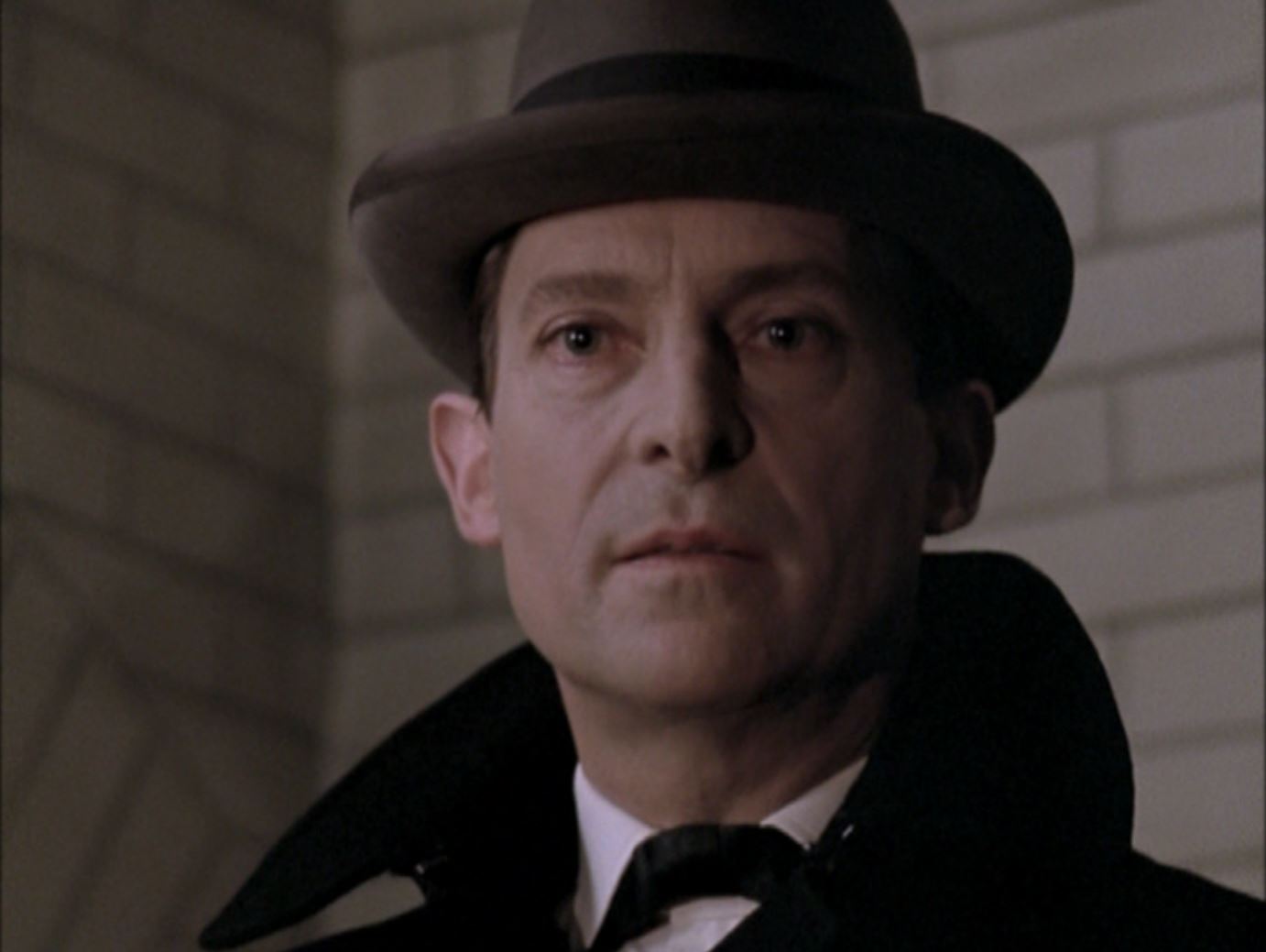
I've reviewed several episodes of the delightful Granada television productions of Sherlock Holmes cases starring the masterful Jeremy Brett, but I haven't really talked about the music much in any of those reviews.  So I'm here to rectify that today.


A recording of music used in Sherlock Holmes (1984-1994) was released on CD a decade or so ago.  (Granada did two TV movies and four miniseries, all under different names, over ten years.  They're now all just lumped together and called the Granada Sherlock Holmes.  Because Granada insists upon being DiFfErEnT about everything, I guess?)  ANYWAY, the soundtrack is lots of fun to listen to if you're a fan of the show, but I've pulled out a few tracks that I think you'll enjoy even if you haven't watched it.

By the way, if you're a BBC Sherlock fan, the opener for The Abominable Bride (2016) mimics the opener of the Granada Sherlock Holmes series.  Which I find absolutely endearing.  Anyway!  Here's the main theme for the series, all energetic and mysterious and ready for adventure:


Since we're entering the Christmas season now, I thought it would be fun to share "Mr. Henry Baker's Christmas," which is from the episode "The Blue Carbuncle."  I like how it brings in traditional Christmas carols like "God Rest Ye Merry, Gentlemen" and "Silent Night," but winds them around its own sprightly themes as well.


And I really like "Irene Adler" from "A Scandal in Bohemia" because it's wistful and yearning, but not maudlin.  It's elegant, even, but with a sprinkling of humor, and builds through some very minor parts to a satisfying, quiet conclusion.


The score uses a LOT of violins and other strings, for obvious reasons, since Holmes himself is a violin devotee.  You can listen to the score here on YouTube, and it's not terribly hard to track down a reasonably priced copy on CD either.


I'm contributing this post to the Celebrate Jeremy Brett Month event hosted all through November by Carissa at Musings of an Introvert.  Check out her post here to see the other entries.

Sunday, November 21, 2021

"The Red Headed League" (1985)

I've always had an affection for the Sherlock Holmes short story "The Red Headed League."  It's one of the first canon Holmes stories I remember reading, and I think still it's one of the best.  (Reportedly, it was a favorite of A. Conan Doyle as well...)


Cowboy and I are watching our way through the Granada television Sherlock Holmes series once again, those absolutely delicious adaptations starring Jeremy Brett as Holmes and first David Burke, then Edward Hardwicke as Dr. Watson.  They are a joy and treasure!  We watch one every month or two, making the series stretch out over a couple of years so that we can just start right over again when we finish it, and the episodes will remain fresh and delightful.  


Since Carissa is hosting Celebrate Jeremy Brett Month at her blog Musings of an Introvert all through November, I wanted to contribute a review of some episode of this series, and this seemed like the perfect choice.  So, here we go!


Red-haired pawnbroker Jabez Wilson (Roger Hammond) comes to ask Sherlock Holmes (Jeremy Brett) his advice on a very peculiar problem.  He was offered a place in the Red-Headed League, which he'd never heard of, but which seemed like a legitimate -- if eccentric -- group.  


Membership required him to spend several hours every day at the League's office, copying out the encyclopedia!  For that, he received a rather nice bit of money every week.


But then, the League is dissolved with no warning at all, and Wilson can't help but feel he's had an enormous trick played on him somehow.  It's up to Sherlock Holmes to figure out what on earth was actually going on, with a bit of assistance from Dr. Watson (David Burke).  


If you haven't read the story, look it up on Project Gutenberg or something (it's in the public domain) and spend a happy few minutes reading it to find out how everything winds up.  I am not going to spoil it here.


"The Red-Headed League" was part of the earliest series of Sherlock Holmes episodes with this cast, called The Adventures of Sherlock Holmes.  Jeremy Brett is in his absolute prime here as Holmes, energetic, oozing intelligence, and so charismatic you just can't take your eyes off him.  


While the complete set of Jeremy Brett outings as Holmes has become pretty expensive, you can get The Adventures of Sherlock Holmes on DVD new for less than $20, or used for a lot less.  If you enjoy period dramas, mysteries, or are just a Holmes fan, do yourself a favor and try them!

Is this episode, and the show as a whole, family friendly?  Basically, yes.  Once in a while there's a mild cuss word, and sometimes criminals get violent, but it's overall quite respectable.


As I said at the beginning of this post, it's a contribution to Celebrate Jeremy Brett Month hosted here at Musings of an Introvert throughout November.  If you're not familiar with Brett's acting, or if you're already a fan, definitely check out her event to see what other people are posting to celebrate this iconic British actor!

Monday, November 15, 2021

Movie Music: Hans Zimmer's "The Lone Ranger" (2013)

I love this soundtrack. And this movie. I bought the soundtrack shortly after I saw The Lone Ranger (2013) in the theater for the second time.  For the next two years, I never put the CD on my shelves -- it lived in the kitchen, next to the little CD player I use while I'm cooking. I listen to it at least once a month still, usually on those hard-to-get-moving mornings when I need a blend of oomph and comfort to set me on my feet. It shot quickly to the top tier of my list of favorite soundtracks, and I doubt it will ever drop out of the top ten. 


By now, this music courses through my veins. It's become an integral part of my consciousness. So right now, you're going to hear the music that flows through my brain at some point just about every single day. This is what it sounds like to be inside my head, some of the time anyway. 

I'll start you off with "Silver," a gentle, haunting song. It begins wistfully, then builds to a theme of yearning and desire. 


"Ride" starts off sounding like something from one of Ennio Morricone's spaghetti western soundtracks. That first 45 seconds of it makes me want to jump on a horse and, well, ride. Ride toward something important, some necessary action. Then it twists, becoming quieter, more thoughtful. Later, it opens up into a sweeping theme that makes me think of wide-open spaces, with no boundaries or limitations. 


And as for the "Finale," well, this is my musical happy place. I can't hear it and not smile, not get cheered up, not start to bounce. You know the familiar "William Tell" theme by Rossini, which the old TV show and radio show used for their theme song -- "Finale" takes that theme and runs wild with it. My absolute favorite part kicks in at 7 minutes when the theme returns off-cadence and minor, and then 30 seconds later these trumpets come in with what I think of as a love song to the Old West. That part makes me ache with joy. 


Happy trails!

(The bulk of this review originally appeared here at J and J Productions on August 31, 2015.)

Saturday, November 13, 2021

"Charade" (1963)


Some people call Charade (1963) "the best Alfred Hitchcock movie that Hitchcock never made."  I can see why -- it's got so many of the same ingredients of classic Hitchcock suspense films.  Exotic European locales? Check.  Confused, innocent person pursued by hitherto unknown Bad Guys?  Check.  Beautiful woman in danger?  Check.  Chic costumes?  Wry humor?  Cary Grant?  Check, check, checkity check.

But I love Charade far more than any of Hitchcock's movies.  In fact, there are no Hitch films on my top 100 list, but Charade is firmly there.  I think that's because there's one key difference between Charade and even my favorite Hitchcock films:  I believe the happiness of its ending.  With all of Hitch's films, with the possible exception of The Trouble with Harry (1955), there's always this lingering... off feeling at the end.  Will the hero and heroine live in peace and happiness now that they're through whatever harrowing ordeal we've watched them survive?  In Hitchcock's movies, the answer is usually 'maybe.'  But with Charade, at least for me, the answer is a total 'yes.'


Regina Lampert (Audrey Hepburn) is suddenly, violently widowed when her husband falls from a train... or is pushed.  At his funeral, some very weird characters (played by James Coburn, George Kennedy, and Ned Glass) show up and behave fairly weirdly near the coffin.  


Then, they start threatening Regina.  They claim her husband had a lot more money than she knew about, and they insist he stole it from them.  The trouble is, no one can find the money.

A handsome, helpful man called Peter Joshua (Cary Grant) helps her out of a couple of jams, protecting and rescuing her from the three weirdos several times.  Peter and Regina had met before, just before her husband died, and she's all to happy to have him around giving her advice and shielding her from harm.


However, things keep getting stranger and stranger.  It's as if Regina is trapped in a kaleidoscope that a little kid keeps turning.  Names, identities, stories, and situations shift without warning, keeping her constantly off-balance.  Without Peter Joshua there to steady her, she would surely lose her footing completely.


Watching Audrey Hepburn and Cary Grant together is pure magic.  Grant didn't initially want to make the movie because he felt the 25-year age gap between himself and Hepburn made the film's romance too ridiculous.  The screenwriters added a lot of little jokes about it to appease him, and he agreed to make the movie after all.  Thanks to those jokes, what might have been a slightly weird love story turns into a quirky and charming one, all because the characters acknowledge their age difference and accept it, so we do too.  Completely brilliant.

(Oh, and Regina was planning to get a divorce before her husband suddenly died, so that neatly eliminates any weirdness about her falling in love right after her husband's funeral.  For me, anyway.)


I watched this with my best friend a week or so ago.  I love this movie and have seen it many times, but she had only seen it once and didn't like it.  That made her curious to know why I love it.  I decided it mostly boils down to the fabulous dialog that makes me laugh and laugh and laugh, and the fact that I totally love the two main characters.  The lovely costumes and exciting story are fun bonuses, but they're not what draw me to the story.  I am here for Hepburn and Grant trading snappy, snarky, sassy one-liners and falling in love along the way, and that's all there is to it.


While we watched this together, my best friend commented that she really doesn't understand why Regina keeps trusting Cary Grant's character when his story changes every twenty minutes or so.  He's obviously lying to her -- he admits that repeatedly, and tells her new lies.  Why does she continue to trust him for so long?  I had to think about that for a bit, because it's a good question.  


I finally concluded that she trusts him because his words change, but his behavior doesn't.  He is always, always there for her, ready to help, rescue, shield, encourage.  He cheers her up, makes her laugh, feeds her, comforts her.  His truthful actions speak louder than his lying words, and those are what she trusts.  Only when she thinks she can't trust his actions anymore does her trust in him waver.

(Mild spoilage in this paragraph.)  Also, here's something I never picked up on while watching it all these times, but did while screencapping it -- Cary Grant is nearly always shot facing toward the right of the frame.  That codifies him as being a trustworthy good guy heading in the right direction.  Whenever he and Audrey Hepburn share the screen, he's on the left, looking right, as you can see in my screencaps.  That very subtly lets the audience know that yes, he is a good guy doing the right thing.  Pretty cool.  (It also means that whenever they share the screen, Audrey is looking left and thus signals that she's confused, going backward, or not doing things quite the way she ought, which is also super interesting.)  (End spoilage.)

Is this movie family friendly?  Mostly.  There are a couple of instances of taking God's name in vain, and maybe another mild cuss word or two.  There's this weird scene with people on a riverboat playing a game where they have to take an orange from the other person without using their hands that gets a little suggestive.  And there's a very tense and menacing scene where someone is threatened while getting burning matches dropped on them.  There's a gunfight and some hand-to-hand fighting, all sixties-style and non-gory.


This is my contribution to the Distraction Blogathon hosted by Taking Up Room.  The money in Charade is a MacGuffin because no one in the audience actually cares about it, it's just a reason to have a bunch of guys chase Audrey Hepburn while she trades sparkly quips with Cary Grant.  If you like classic cat-and-mouse movies, but you haven't seen Charade (or haven't seen it recently), it's FREE on Amazon Prime right now!  And it's not expensive on DVD either.

Friday, November 12, 2021

My Last Femnista Post


Yes, it's true.  After ten years of "[b]ringing young women together to inspire and create, through art, fiction, history, and literature," Femnista is ending.  The final issue is dedicated to Things We Love, giving contributors a chance to celebrate one last movie, book, or other piece of entertainment or art is dear to our hearts.

My final article is called "Forever My Favorite: The Man from Snowy River" and you can read it here.


Sunday, October 31, 2021

"No Time to Die" (2021) -- Initial Thoughts

No Time to Die
 (2021) gave me something I've never gotten from a James Bond movie: a hero.

Don't get me wrong -- I've thoroughly enjoyed many James Bond movies, and loved several.  I am a fan of the franchise, overall.  But James Bond has never been an actual hero for me.  His movies deliver adrenaline-fueled fun, and that's all I need from them. 

I'm not sure what I think about No Time to Die overall.  I think it was a little longer than necessary, and I still haven't figured out a couple things.  Which means I just need to watch it over again, that's all.  A second viewing will determine whether I quite like it, or just kinda like it.

But I know I loved one thing.  I love that James Bond got to be really, truly my hero for the first time that I can really remember.  Oh, he always gets to play the hero: stop the bad guys, save the day, put himself into harm's way for queen and country.  But that's different than actually being my hero.  

The moment that made him my hero is kinda spoilery, so maybe don't read farther if you're caring about spoilage.  Go see it, come back and read this after, etc.

You see, James Bond gets to do something in this movie that he often fails to do:  he saves the girl.  Yes, I know there have been Bond girls who've survived to the end of the movie before.  They don't all die.  But back in GoldenEye (1995) when Alec Trevelyan taunts Bond about all the dead women he failed to protect... he's onto something.  A lot of Bond girls die in a lot of Bond movies.  And it's usually somehow Bond's fault -- he's usually just a little too late.

So, it was a big and exciting moment for me when James Bond put the woman he loves, another woman, and a little girl into a raft and sent them away to safety.  Because, in that moment, he became the truest, highest, realest kind of man.  A real man who will shield and shelter women and children with his every resource, including his own life.

And that woman he loves?  She does what real women do:  she realizes the gravity of the situation and accepts his protection.  She does not pretend she doesn't need his protection or his help.  She does not scorn it.  She does not protest at all.  He offers to send her to safety, and she goes.

Did I then cry?  I did.  I got tears of pride and joy in my eyes, watching James Bond become, at long last, my hero.  That moment was worth the price of admission, the price of my popcorn and Coke, and the slightly overblown runtime.  I was so thoroughly happy.  Well done.

Friday, October 29, 2021

Movie Music: Bernard Herrmann's "Jane Eyre" (1943)

I have only been a fan of the 1943 Orson Welles/Joan Fontaine version of Jane Eyre for about a year.  Very late to that party, I know.  But like it more and more every time I watch it.  You can read my review of it here, and see how it stacks up against other versions of Jane Eyre that I've seen on my comparisons page.  


In this post, I'm going to focus on Bernard Herrmann's score for this film, a score that fits the moody, atmospheric imagery of this adaptation just perfectly.  I'll focus on my favorite tracks, but you can currently listen to a nice recording of this soundtrack on YouTube here.  I have the original motion picture soundtrack on CD, conducted by Bernard Herrmann, but the version on YouTube is enjoyable too.  And, if you want something kind of dark and intense to listen to over Halloween weekend, it's definitely a nice choice for that!

My first selection, "Jane Alone," has a pensive and gentle beginning.  But it turns darker, more passionate.  This piece really evokes Jane Eyre's unhappy childhood, taunted and tormented by her cousins and always craving peace and quiet.  


"Rochester's Past/The Fire" is actually two tracks put together, but they work nicely that way because they're both filled with sturm und drang, as the Germans would say -- storm and stress.  Those are big parts of the Romantic literary tradition that Charlotte Bronte's novel Jane Eyre belongs to, so this fits really well with the story being told.

This music begins with a kind of glowering sadness that matches Rochester's story of his tragic (at least, in his mind) past.  It's not stormy at first, but it has a definite darkness to it.  Then the tension mounts, and around 2:30 into it, the music turns frantic, leaping and darting around in crazy ways that definitely makes you think of fire.  This fits to the part of the movie where someone sets fire to... well, I won't spoil it, but there's fire, there's a rescue, and it's all pretty thrilling.  

I love the way Herrmann uses anxious strings and mournful wind instruments here to let us know what is happening is both scary and sad.


My last selection to share with you today is "The Garden," which is the music from the pivotal scene where Jane Eyre and Mr. Rochester first declare their love for each other.  (That's not a spoiler, right?  This is a love story, and we all know it, right?)  It starts out a little bit ominous, but layers that with a sweetness and hope that clue us in to the happiness these two characters are about to glimpse.  But the music never turns altogether joyful, always a little wary and dark even in this happy scene.


So, now you've had a taste of what Bernard Herrmann's score for Jane Eyre is like!  I hope you've enjoyed this little tour.  This has been not only part of my ongoing Movie Music series, but also my contribution to the Bernard Herrmann Blogathon hosted by Classic Movie Muse all weekend long.  Check out her post here for links to the other contributions.