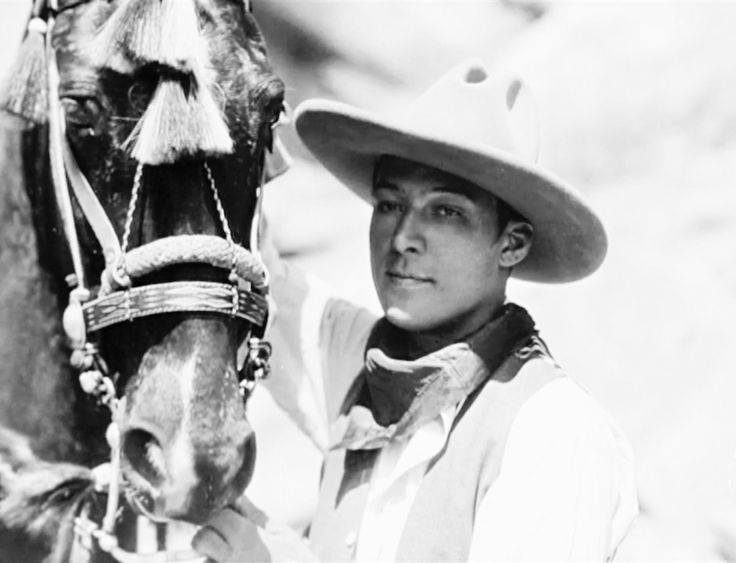
Happy birthday, Rudolph Valentino!
 |
(NO idea how this photo came about, other than I've seen one of him in the same hat
that says it was taken at Palm Springs. Not from any of his movies, AFAIK.
Definitely not from Beyond the Rocks. But I wanted to use it anyway.) |
I tend to celebrate Rudy's birthday by watching one of his movies, and sometimes by blogging about them, or posting a little tribute to him, or whatever. He's rather special to me, for various reasons, one being that I'd love to go back in time and make friends with him because I think he could have used a very good friend who wouldn't let him die alone in a hotel. But that's another story. Anyway, I love Rudy, and that's why he's up there on my blog header right now, with my other two beloved May birthday boys, whom I'll blog more about later this month :-)
In Rudy's honor, today I'm reviewing his movie
Beyond the Rocks (1922), which is based on a novel by Elinor Glyn. The only thing I know about Elinor Glyn is that she wrote trashy novels that Marion the Librarian mentioned in
The Music Man. Judging by this movie, I won't be reading any of her books. Not that it's exactly terrible... it's just not very good, either.
(If you want to read my reviews of some of Rudy's really good movies, I've written about
The Sheik (1921),
Moran of the Lady Letty (1922), and
The Eagle (1925) pretty extensively.)
SO I'm going to review it anyway because it's not a total write-off. I mean, it's still a Rudolph Valentino movie, and we've only got a precious few of those. It's the only film he and Gloria Swanson made, and as you can tell from the lobby card above, she was kind of a bigger deal than he was at that point. Or the studio thought so, anyway. In fact, they spelled his name Rodolph there. (It was originally Rodolfo, and it get spelled several different ways in Hollywood, and nobody ever seemed to care. Simpler times, my friends. Simpler times.) This film was only recently rediscovered -- there were no known surviving copies until someone found a print in 2003, in the Netherlands. It's been preserved and digitally remastered for the DVD, with a new soundtrack and new English title cards, since the copy they found had Dutch ones.
The print is pretty fair for a film of this age, but there are several places where it was obviously unsalvageable, and gets all bubbly and weird. However, what we do have is entertaining, especially this one thing I
think Rudy does in two different places, which delighted me so much that I'll totally rewatch this for just those moments. Which I'll tell you alllll about when we get to them.
So anyway, it all begins with this chick, Theodora (Gloria Swanson), out for a row in her boat. She's waving to her beloved, aging father, who's watching from the shore.
For no fathomable reason whatsoever, except for the fact that she handles the oars like she's never been in a rowboat before, she falls out. Nearby, there's this handsome, sophisticated man about town, Lord Hector Bracondale (Rudolph Valentino).
Obviously, he's going to dive over the side of his own natty boat and rescue the drowning wench. Even though he's been saddled with a completely dreadful name like Hector Bracondale, he's still a Nice Guy.
He rescues her, carries her ashore, comforts her over the resultant bedraggled condition of her clothing, pats her hand, and generally behaves as if it's perfectly natural that her heavy lipstick and eye makeup haven't smudged a bit after all that thrashing about in the water. Maybe it's because his clothes seem to have dried instantly, and he's hoping she won't notice.
Logic has no place in this story. (Simpler times?) But narcissi do! She gives him a droopy, forlorn narcissus that somehow stayed attached to her clothing through all the watery heroics, and he sniffs it appreciatively.
Now, Theodora has two much older half-sisters from a love affair her father had a long time ago. They sit around making snide remarks and trying to marry her off to someone rich.
And by snide remarks, I mean that they say this sort of thing about Rudolph Valentino:
I'm rather disappointed that the restoration committee didn't do a better job with the title cards. These are really boring and flat and generic and horrible. On the other hand, this movie is fairly flat and generic itself, so they do kind of match it. But anyway, those sisters did get the "wonderful" part right about Rudy, so I can't write them off as complete morons.
They find this old guy (Robert Bolder) who is super rich and named Josiah Brown (which is a way better name than Hector Bracondale, if you ask me) and throw Theodora at him, and he likes her because she's young and pretty, and her dad needs money for whatever reason, so she agrees to marry him even though he makes her lips curl with disdain. But it turns out everything makes her lips curl with disdain, so maybe she doesn't dislike him that much after all.
So even though she's just been rescued from a watery grave by Rudolph Valentino, she agrees to marry Josiah. We don't see the wedding, just the wedding dress, which does not look comfortable, does it?
We also get treated to a lingering shot of a train entering a tunnel, which I'm pretty sure is supposed to symbolize the wedding night. Kind of an overused visual metaphor these days, but in 1922 it was probably very edgy and fresh. You can see here what I mean about the film being badly damaged in some places -- and this is one spot where you can actually still see some of what is happening. There are a couple places where it just dissolves into bubbly goop.
Annnnnnnnnnnyway, Josiah and Theodora honeymoon in the Alps. Where there's festive dancing. Who doesn't enjoy a bit of festive Germanic dancing?
Also at that same little Alpine lodge, we meet up with... Lord Hector Bracondale! (I keep wanting to drop the 'r' from his name and call him Lord Bacondale. I'm sorry, Rudy -- I honestly don't view you as just a morsel of salty goodness! Truly!) He's there with his mom and this chick his mom wants him to marry. He's attentive and charming and everything I'd like to imagine Rudy would have been in real life if he went out to dinner with you and wanted you to have a nice time.
Hector conveniently gets hold of a handkerchief dropped by Theodora, which has conveniently been doused in
Eau de Narcissus by some random maid, but he can't figure out what the scent reminds him of, so he just looks attractively puzzled, then shrugs it off.
Theodora makes friends with this older lady while in the Alps, and they decide to go mountain climbing. Which involves some pretty impressive scenery, I must say.
This, of course, is what all well-dressed ladies wear while mountain climbing: tight skirts and high-heeled boots. Very sensible. Mmmhmmm.
It comes as no surprise to anyone in the audience with a lick of sense that Theodora promptly falls over a cliff.
Happily, who should be hiking about that same mountain at the same time but dear Lord Hector? Complete with a rifle that has a rather exciting-looking scope mounted on it. Alas, he never gets to use the rifle for anything, just hands it to his buddy and goes to rescue yon damsel in distress.
He doesn't actually recognize her at first, but she remembers him (who wouldn't?!?), and neither of them makes any snide remarks about each others' wardrobe decisions that morning, so they spend a merry interlude waiting for help to come rescue them both, because you see, Hector didn't so much rescue her as just lower her and himself down to another ledge and then send his buddy and her friend to find actual help. But how much can you really expect of a man named Hector Bracondale, after all?
Okay, so then they get really rescued at last, and she goes off to her husband. He gets hold of her handkerchief again somehow, smells it, and then... oh then...
...he breaks the fourth wall. Looks straight into the camera. Very deliberately.
And then he grins at us! Makes this little, "Aha!" gesture, like we're sharing a secret with him or something. It's 100% adorable, and half the reason I will definitely be watching this movie again. (I have to admit, though, that I'm only guessing he's breaking the fourth wall here -- on my TV, that's how it looks. On the big screen, he might be focusing off into the distance a bit more, but I'll probably never know that. I prefer to believe he's looking Straight At Me, thankyouverymuch.)
Anyway, Theodora and Josiah leave because he's all freaked out that she almost died while on a mountain climbing expedition he was too old and tired to go on. Hector's infatuated with her now, and gallantly kisses her hand farewell.
Josiah and Theodora go to Paris, where she is bored silly because she married a boring old man. Dude, Theodora, what did you expect?
Her dad shows up, though, and takes her out to supper. Good dad.
Guess who else is there? Yeah, Hector's basically stalking her at this point. I simply can't like Hector. My deepest apologies to Rudy. He's actually doing some of the best acting I've seen from him -- he's got some lovely, nuanced scenes, and seems pretty relaxed during a lot of it. But his character... no thanks. He actively pursues a married woman. Bad Hector. Bad, naughty,
evil Hector.
I'm not sure why he even wants her. She's always making faces like this:
In fact, on a whole, I was not impressed by Gloria Swanson here. The only other thing I've ever seen her in is
Sunset Boulevard (1950), but I am not inspired to seek out more of her movies. She's four years younger than Rudy, but looks and acts like she's ten years older. She never seems to be attracted to him, even though her character is supposed to be falling in love with him, and most of the time she looks like she's just enduring his presence and waiting for the scene to end.
Rudy, in turn, does some acceptable acting with her, but his best scenes are the ones she's not in. Maybe he was intimidated by her, since she was a bigger star at that time? Maybe she was annoyed that he was getting a lot of press and attention because
The Sheik had made such a big splash the year before? Who knows. All I know is, he had much better chemistry with Agnes Ayres, Vilma Banky, and Dorothy Dalton than he does with her.
But just when we start to feel moody and depressed at how boring this movie has gotten, in comes Hector's sister Anne/Ann/Anna (June Elvidge). The title cards tell us she and Hector have always been good pals and confidants.
Oh. My. Goodness. Why couldn't they have made more movies together? Because she and Rudy have a wonderful, natural rapport!
Look at that bright smiles! There's nothing like that in the scenes with Gloria Swanson.
Once their mother leaves, sister Anne/Ann/Anna (the title cards can't make up their minds) asks Hector what's wrong, and he gets all pensive and swoon-inducing.
In earlier scenes where he was supposed to be sad about leaving Theodora, he mostly looked vaguely tired and did droopy things with his eyebrows. But here, he looks genuinely sorrowful. Man, this scene between them is just soooo good.
Don't you want to help the poor guy?
(I mean, no, I don't want to help him, because he's mooning around over a married woman, and
that's wrong. But I want to give him a hug and cheer him up.)
Anyway, more plot happens, and the movie drags on another like forty minutes. Josiah and Theodora and Hector all end up at the same house party. Nobody has a good time. Including me.
Hector is reduced to lovingly caressing the back of the couch where Theodora's hand rested for a while. Which briefly makes me wish I was a couch.
After some silly other plot nonsense, he goes home. Where he has a dog. I'm wondering if this was one of Rudy's own dogs? I know he had several, and it kind of looks like one I've seen him pictured with a lot. Anyway, it's a sweet dog.
And then there's this whole mix-up with letters that got mailed to the wrong people. I'm so tired of the plot by this point that I'm not going to bother detailing it anymore. It's so lame, it needs crutches.
So I'm only mentioning this scene because Rudy breaks the fourth wall AGAIN!!! He looks straight at the camera and mouths "thank you" when he gets a letter addressed in Theodora's hand. Which is the other half of why I will watch this again one day.
However, poor Josiah also got a letter from her -- a malicious person switched the letters Theodora sent Hector and Josiah, so now Josiah knows that she loves Hector, though she says that she's going to remain faithful for him, and has broken with Hector forever. Blah blah blah. Poor Josiah!
Heartbroken to learn she doesn't love him, he goes off on an archaeological expedition to the Sahara, like any sensible person would.
Archaeology ensues.
Also, there's a big battle with a bunch of Bedouins who like to ride around shooting people. They're probably the same bunch that attacked Rudy in
The Sheik.
And then Josiah breaks
my heart by committing suicide-by-Bedouin. He just puts down his pistol, says goodbye to Theodora's picture, and walks out of his tent into a bullet. Theodora and Hector and Theodora's father have been rushing to find Josiah, and of course they arrive just in time for him to die in Theodora's arms.
Not only that, but he joins Hector and Theodora's hands and tells them to be happy together. Guy oughta get a sainthood, I tell you.
Personally, I think it would have been way more interesting if he'd recovered, and Theodora discovered she loved him after all, and they'd lived happily for the rest of his shy, nervous years. And Hector was left lonely and alone, which would serve him right for running around after a married woman, the cad.
But nooooooooooo, we have to have a proper Hollywood ending, and so we got a shot of Hector and Theodora a year later, getting cozy on a boat, having passed beyond the rocks of sadness into the open water of joy, or some such fiddle-faddle and rot. And for once, Gloria Swanson actually looks like she's glad to be standing near Rudolph Valentino. If she'd been this cute and saucy the whole movie, we'd all have been better off.
And now you're wondering why I just spent a couple of hours screencapping this clunker and then writing a minutely detailed review of it. All I can say is, it's because any Rudy movie is better than no Rudy movie.
Time to talk costumes a bit more! Because this is made in the early 20s, we get some doozies. Here's a close-up of the wedding dress. Isn't it a lulu? She looks like her veil is going to strangle her.
And the fabric looks like um... wood? Is it supposed to look like wooden boards, with rings and knots and stuff? I don't know.
Rudy, of course, wears absolutely everything well. The man would make a potato sack look studly.
Get a load of this hat! I think she's going for the Vamp look here, how about you?
This hat's cute, I think. Rudy's is cuter, though.
Here's a cool shot of the back of the dress she wears at that house party where no one has any fun.
And some detail of it from later that night. Look how plastered-down her hair is! It's as slick as Rudy's.
There is Absolutely No Reason At All for Rudy to be wearing a pith helmet in this scene. They're still in England, hanging out a someone's house in the country. But he looks like he's off on a safari in darkest Peru or something. And
still looks wonderful. He needed to wear short sleeves more often, cuz he had really nice arms.
I've got no use at all for this dress, but look at that staircase! I wants it, Precious! I love big, open, curvy staircases.
So there's also this daffy interlude where Hector tells Theodora a story about courtiers in Marie Antoinette's day, and it gets acted out by Rudy and Gloria. Because any excuse to stuff Rudy into period clothing? And the weirder, the better, I guess?
There's also a play put on during the house party that's set in the 1800s, and if you've ever wondered what it would be like to have Rudolph Valentino in an adaptation of one of Jane Austen's novels (I can't be the only one, right?), wonder no more! This is what he would have looked like as Mr. Darcy, I'm sure of it:
Okay, enough is enough. Happy birthday again, dear Rudy, and thank you for not making more movies like this one. Next year, I'll highlight one of the good ones instead.